The Relationship Between Financial Autonomy and Decision-Making Power Among Married Women
DOI:
https://doi.org/10.63056/lsjmiss.2.3.2026.403Keywords:
financial autonomy, decision-making power, married women, women’s empowerment, household decision-making, PakistanAbstract
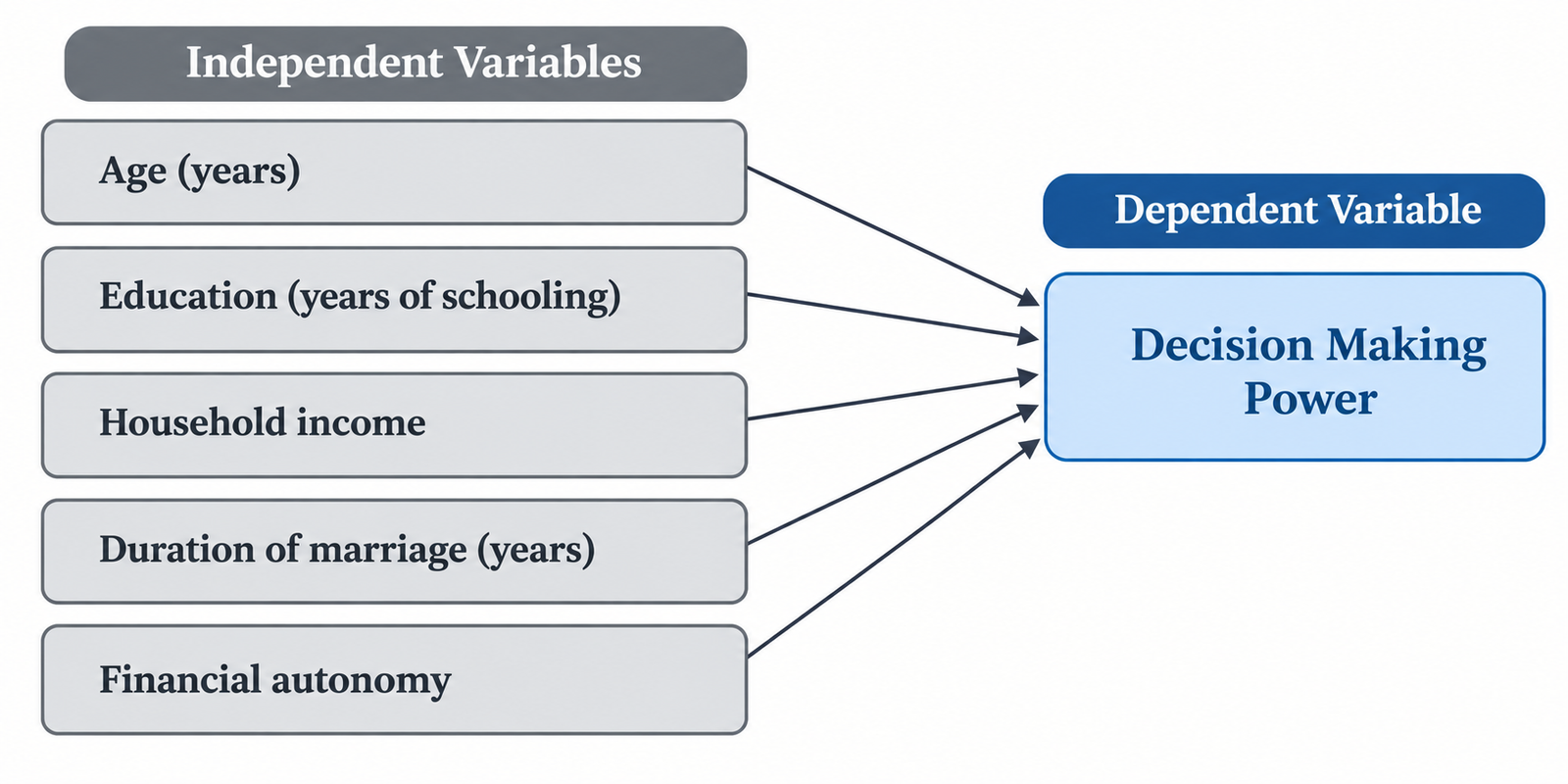
Financial autonomy is considered as an important key to women empowerment and there is limited evidence on the correlation between financial autonomy and household decision-making power in south Asian context. The aim of this study was to explore the correlation between husband's financial autonomy and household decision making power of married women in the context of Multan, Pakistan. A quantitative, cross sectional and explanatory design was applied. The sample of 270 married women aged 20-55 years were selected by multistage sampling from selected urban and rural communities and data were gathered using an interviewer-administered structured questionnaire. Highly reliable composite indices of financial autonomy (personal income, asset ownership, access to banks, control over earnings, and independent spending) and decision-making power (household purchases, children's education, health care, savings, and family matters) were used. Descriptive statistics, Mann–Whitney U test, Spearman's rank correlation, and hierarchical multiple regression were used to analyze data in SPSS. A comparison of the scores of decision making power in the two groups of employed and unemployed women revealed that the scores of employed women were significantly higher than those of the unemployed women. Financial autonomy was positively and significantly related to decision making power. Controlling for age, education, household income, and duration of marriage, financial autonomy accounted for an additional 18% of the variance in decision making power. The results indicate a positive association between more influence over economic resources and women's voice in the household, and favour policies that increase women's access to income, banking services, and education.
Downloads
Published
How to Cite
Issue
Section
License
Copyright (c) 2026 Shan-e-Zehra, Farhat Jawad

This work is licensed under a Creative Commons Attribution 4.0 International License.