Constructing the Nation: Representation of National Identity in Pakistani English Language Textbooks
DOI:
https://doi.org/10.63056/jllsa.2.7.2026.204Keywords:
national identity, textbook representation, content analysis, Pakistani English textbooks, social constructionism, ELT curriculum, religious discourse, identity constructionAbstract
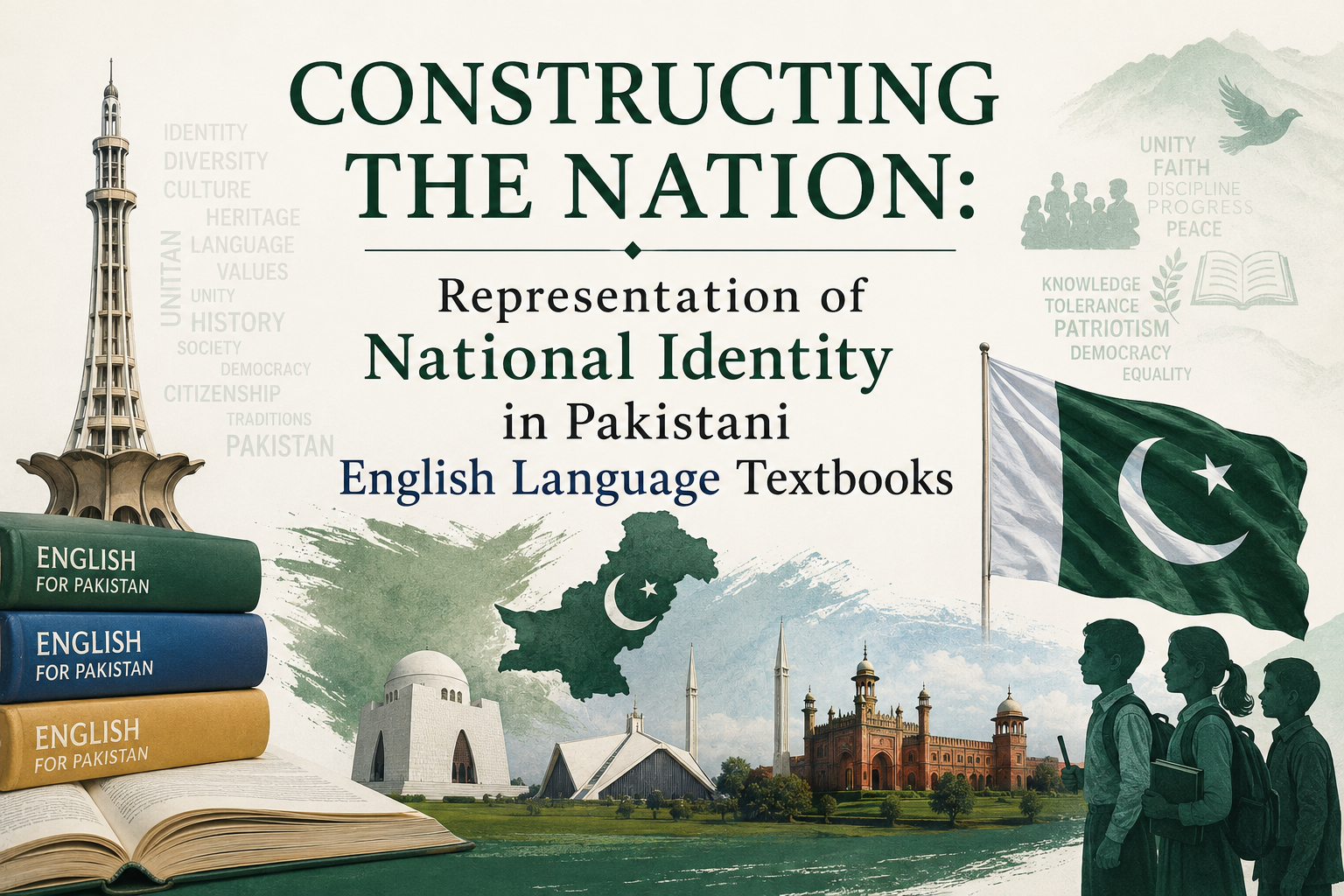
In Pakistani classrooms, the textbook usually is the lesson. It is often the only resource students and teachers have, which means whatever a textbook chooses to say about language, culture, or belonging tends to arrive largely unchallenged. This matters for English in particular, since English carries official status in Pakistan and is widely treated as a mark of modern, educated life. Yet how national identity gets built into English-medium textbooks specifically has drawn surprisingly little sustained attention. This study looks at two secondary-level textbooks used under the Punjab curriculum, English-9 and English-10, and asks two things: what elements of national identity dominate their content, and how are those elements represented. Working from social constructionism and identity theory, the analysis codes nineteen locally authored units against five categories: history, language, culture, sovereignty, and religion. Religion turns out to carry the most weight, and not as an isolated theme; it runs through the historical, linguistic, and political content as well, anchoring most of what the textbooks present as distinctly Pakistani. The resulting picture of national identity is coherent and pedagogically effective, but narrow, with limited room for the country's religious, ethnic, and linguistic diversity. The paper closes by considering what this means for curriculum designers, teachers, and students trying to read these materials critically.
Downloads
Published
How to Cite
Issue
Section
License
Copyright (c) 2026 Shagufta, Fakhar Alam

This work is licensed under a Creative Commons Attribution 4.0 International License.