Cross-Linguistic Influence on Prepositional Errors: A Corpus-Based Computational Study
DOI:
https://doi.org/10.63056/jllsa.2.6.2026.231Keywords:
learner corpus, prepositional errors, interlanguage, cross-linguistic influence, computational linguisticsAbstract
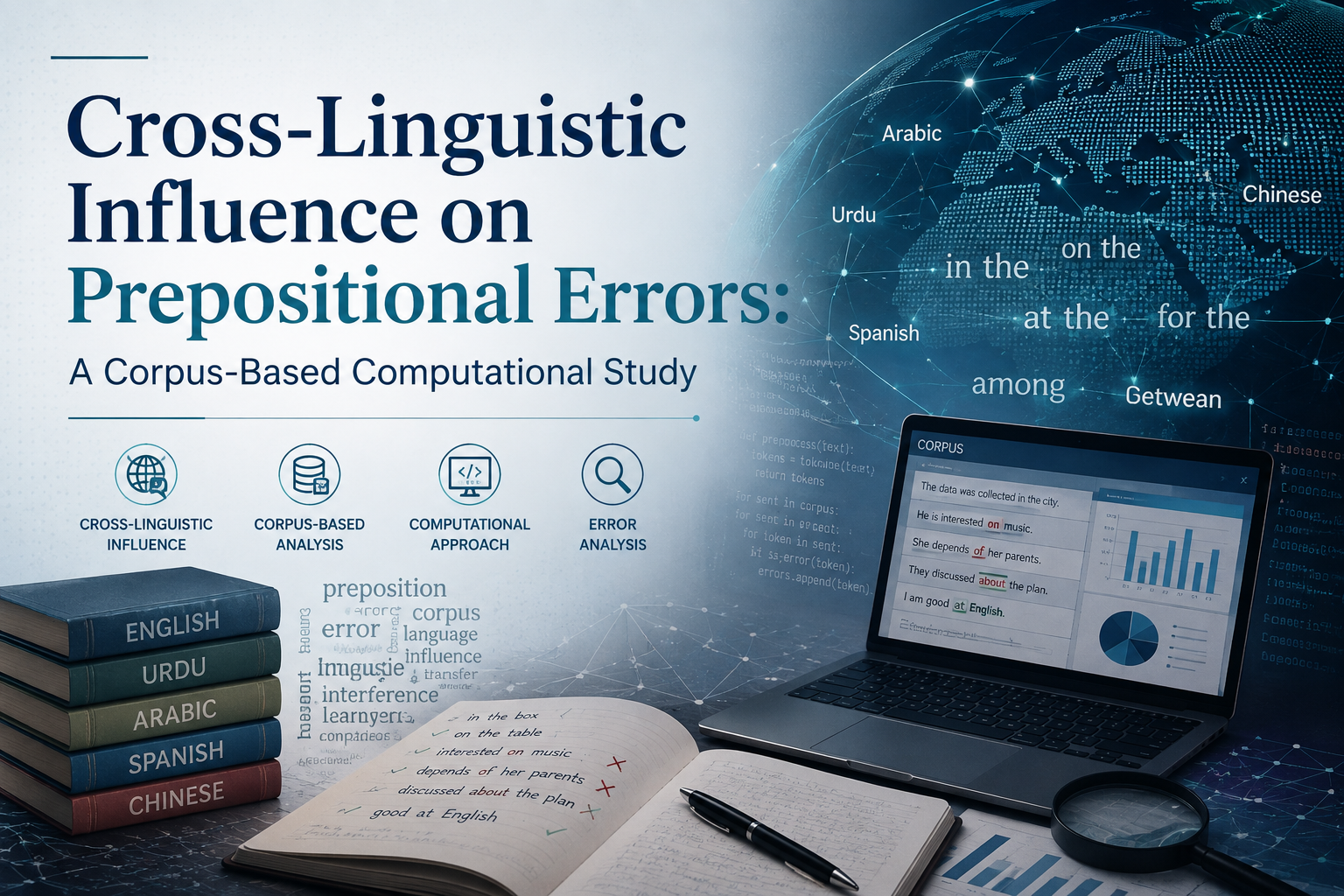
This paper explores patterns of prepositional errors in L2 English writing made by Urdu-speaking undergraduate learners using a corpus-based computational approach. Prepositions are one of the most complicated grammatical categories to learn because they have semantic variability, polysemy and contextually dependence. Sixty translated essays were gathered from two universities to construct a learner corpus. Data were digitized, standardized and processed by means of Natural Language Processing tools, such as part-of-speech tagging and concordance analysis together with manual error annotation. The prepositional errors were categorized into substitution, omission and addition. The results indicate that substitution errors are the most frequent followed by omission and addition errors which indicates the partial and unstable knowledge about the usage of prepositions. The findings also reveal that there is a significant effect of L1 Urdu postpositions on prepositions. Secondly, it points out that the learner interlanguage is systematic in nature and establishes the combination of corpus linguistics and computational methods for analysing leaner language more effectively. The results have valuable implications for corpus-guided pedagogy and the designing of computational tools second language learning.
Downloads
Published
How to Cite
Issue
Section
License
Copyright (c) 2026 Owais Ahmed, Dr. Marriam Bashir

This work is licensed under a Creative Commons Attribution 4.0 International License.