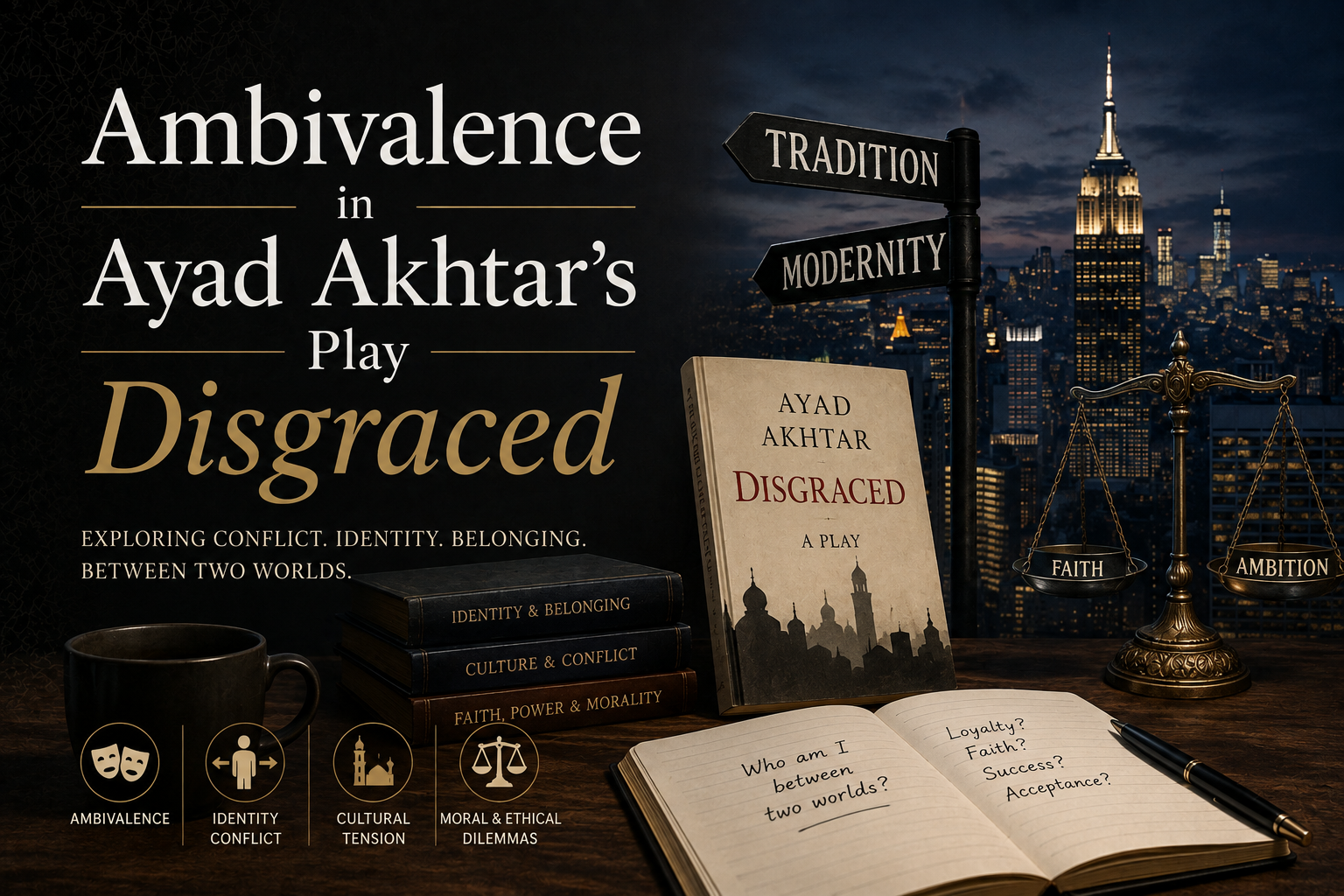
Ambivalence in Ayad Akhtar’s Play Disgraced
DOI:
https://doi.org/10.63056/jllsa.2.4.2026.234Keywords:
Disgraced, Ambivalence, Racism, Prejudice, IdentityAbstract
This research paper aims to explore ambivalence in Ayad Akhtar’s play Disgraced. It explores racial and religious prejudices in even the most developed cultural societies and leads people toward ambivalence. It is based on sociopolitical themes such as the ambivalent state and the self-identity of Muslim American citizens. This research paper intends to highlight how Disgraced uses its diverse set of characters and their conversation to bring up details that are often avoided in everyday conversation and considered taboo due to the fear of being offensive such as people living in a third space, cultural appropriation, racism and prejudice against culture and religion. The theory of ambivalence is applied to focus on the conflicted identity of individuals within the U.S. and the discrimination against Muslims. This research paper explores the behavioral, social, and psychological change and stress that people experience during their encounter with a different culture and society.
Downloads
Published
How to Cite
Issue
Section
License
Copyright (c) 2026 Somia Saeed, Dr. Fahmida Manzoor, Masooma Rubab, Sundas Ahmed

This work is licensed under a Creative Commons Attribution 4.0 International License.