The Interrelationship between Language, Environment, and Society: A Critical Eco-linguistic Study
DOI:
https://doi.org/10.63056/jllsa.2.6.2026.237Keywords:
Ecolinguistics, Language, Environment, Society, Ecological Discourse, Environmental Awareness, Sustainability, Sindhi Language, Culture, Critical Discourse AnalysisAbstract
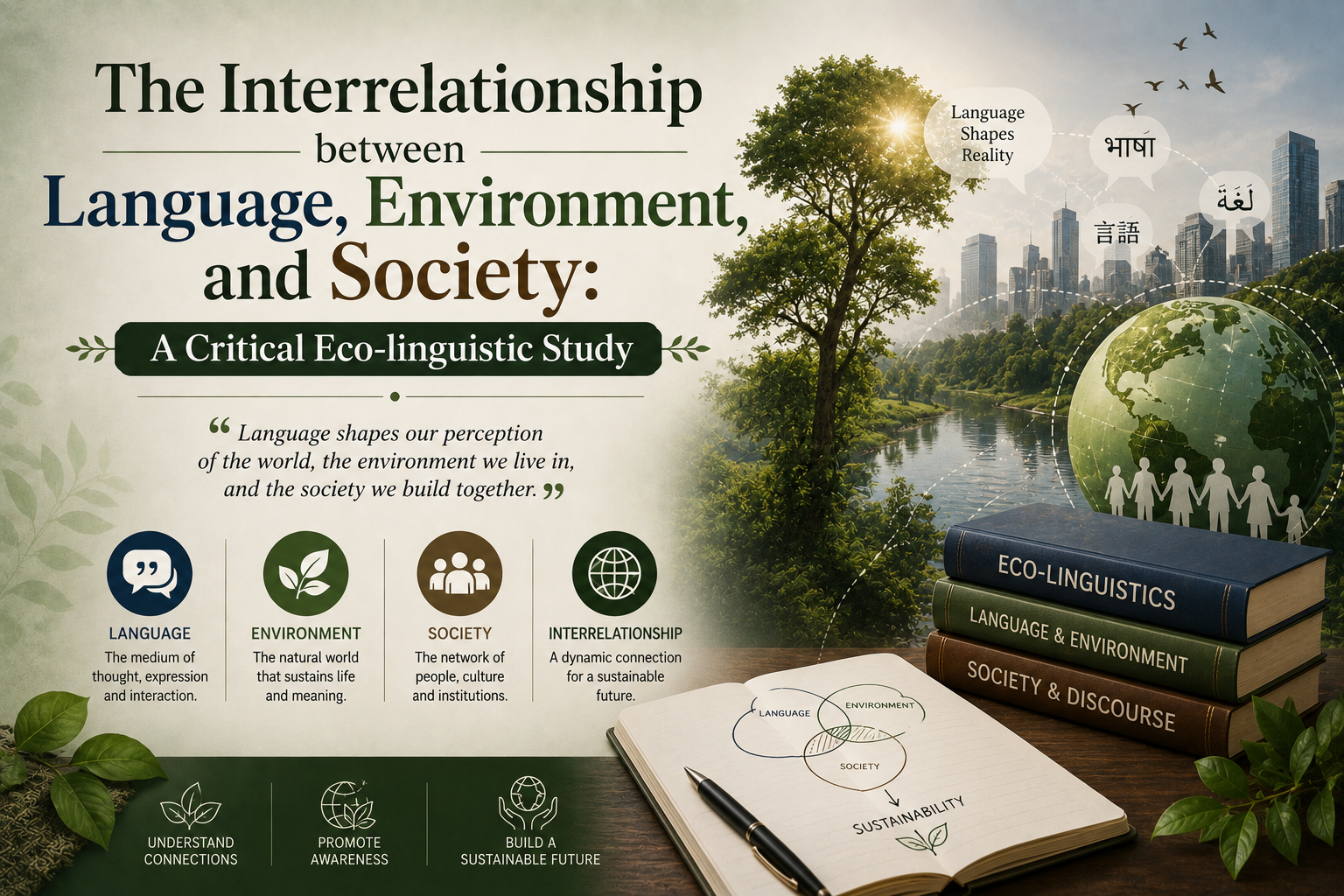
This study explores the interrelationship between language, environment, and society from the perspective of eco linguistics. It examines how language functions not only as a medium of communication but also as a powerful tool that shapes environmental awareness, social values, and human behavior toward nature. Drawing on the theoretical framework of eco linguistics, the study investigates the role of linguistic expressions, environmental discourses, cultural narratives, and social communication in influencing public perceptions of ecological issues such as climate change, environmental pollution, biodiversity loss, deforestation, and sustainable development. The research also highlights the ecological knowledge embedded in the Sindhi language, folklore, proverbs, idioms, and cultural traditions, demonstrating how linguistic and cultural heritage contributes to the preservation of environmental values. Furthermore, it critically examines the language used in media and digital communication to understand its impact on environmental consciousness and social responsibility. Using a qualitative research approach based on document analysis and critical discourse analysis, the study aims to identify language practices that promote environmentally responsible attitudes and sustainable relationships between humans and nature. The findings are expected to demonstrate that language plays a significant role in constructing ecological worldviews, shaping environmental ethics, and encouraging sustainable social practices. The study further argues that eco linguistic approaches can contribute to environmental education, public policy, media communication, and the promotion of sustainable development. By emphasizing the importance of environmentally beneficial discourse, this research seeks to provide valuable insights for strengthening ecological awareness and fostering a more socially inclusive and environmentally responsible society, particularly within the Sindhi cultural context.
Downloads
Published
How to Cite
Issue
Section
License
Copyright (c) 2026 Bakhtawar Channa, Dr. Phuloo Sunder Meghwar, Saima Solangi, Nigaar Pathani, Azizullah Phull

This work is licensed under a Creative Commons Attribution 4.0 International License.