Donning The Dative Dragon in Urdu
DOI:
https://doi.org/10.63056/jllsa.2.8.2026.238Keywords:
Dative case, Dative Subjects, Differential Case Theory (DCT), Urdu postposition ‘-ko’Abstract
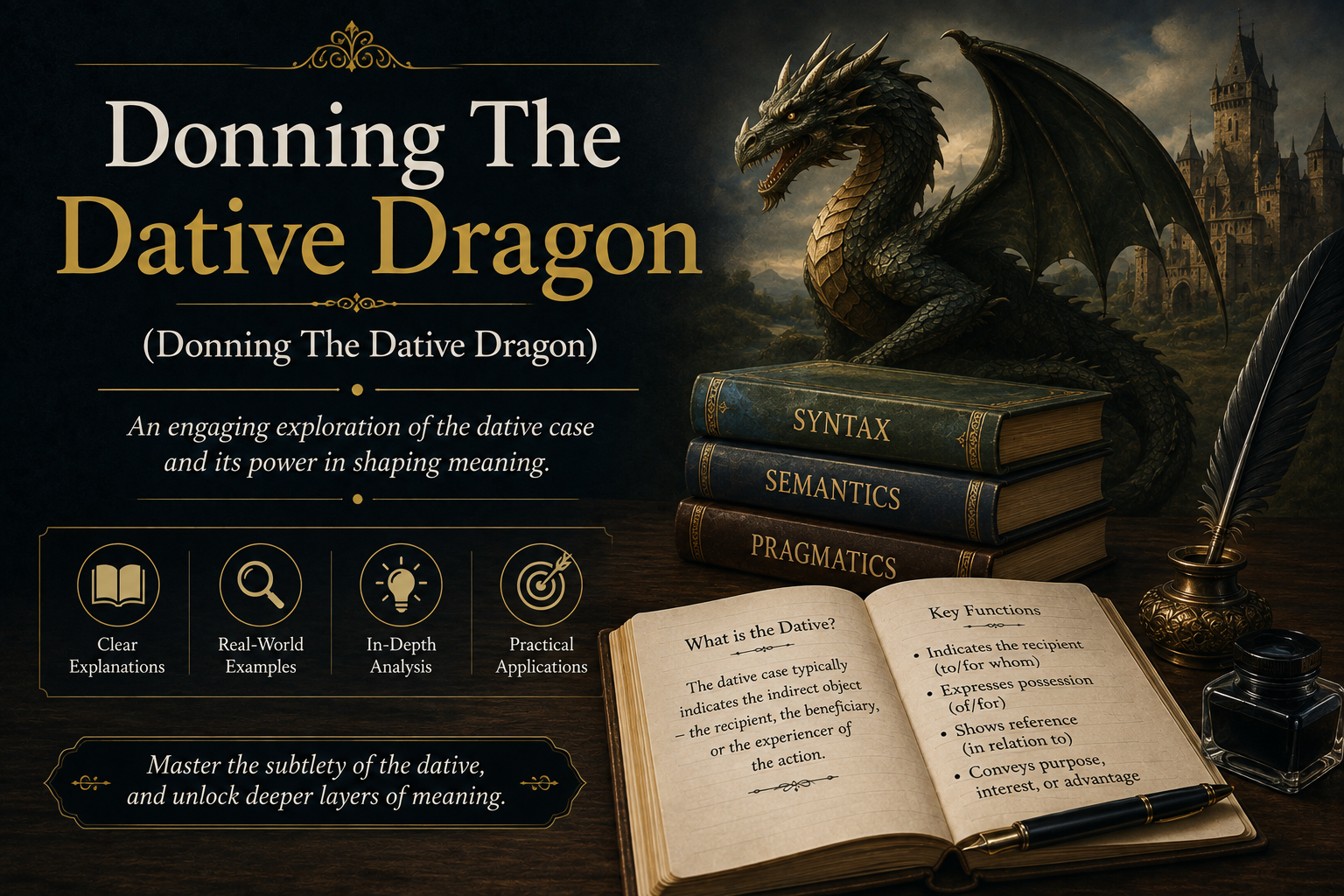
This study investigates the syntactic and semantic functioning of the Urdu postposition ‘-ko’ as a dative case marker, moving beyond its traditional treatment as an indirect-object marker syntactically and goal/benefactive semantically in ditransitive constructions. Drawing on Butt's (2005) Differential Case Marking Theory (DCT), the study sketches the range of implementations in ‘-ko's syncretism between accusative and dative cases, the alternation of dative with ergative marking in complex predicates, and its apparent and ultimately rejected alternation with genitive marking in experiencer subjects. The main concerns are dative subjects with conjunct verbs, copula constructions and non-finite clauses. The analysis further offers counter-examples to Butt's (2006) account of quirky case, arguing that dative marking in Urdu is not restricted to goal/benefactive roles but extends across transitive, intransitive, and non-finite domains. A brief comparison with Punjabi ‘-nu’ marking situates these findings within a broader South Asian typology of differential case alternation.
Downloads
Published
How to Cite
Issue
Section
License
Copyright (c) 2026 Nida Sheikh, Dr. Baber S. A. Khan

This work is licensed under a Creative Commons Attribution 4.0 International License.