Voyaging into Freedom: An Existential Interpretation of John Masefield's Salt-Water Poems & Ballads
DOI:
https://doi.org/10.63056/jllsa.2.6.2026.241Keywords:
Maritime, Existential Choice, Quest, FacticityAbstract
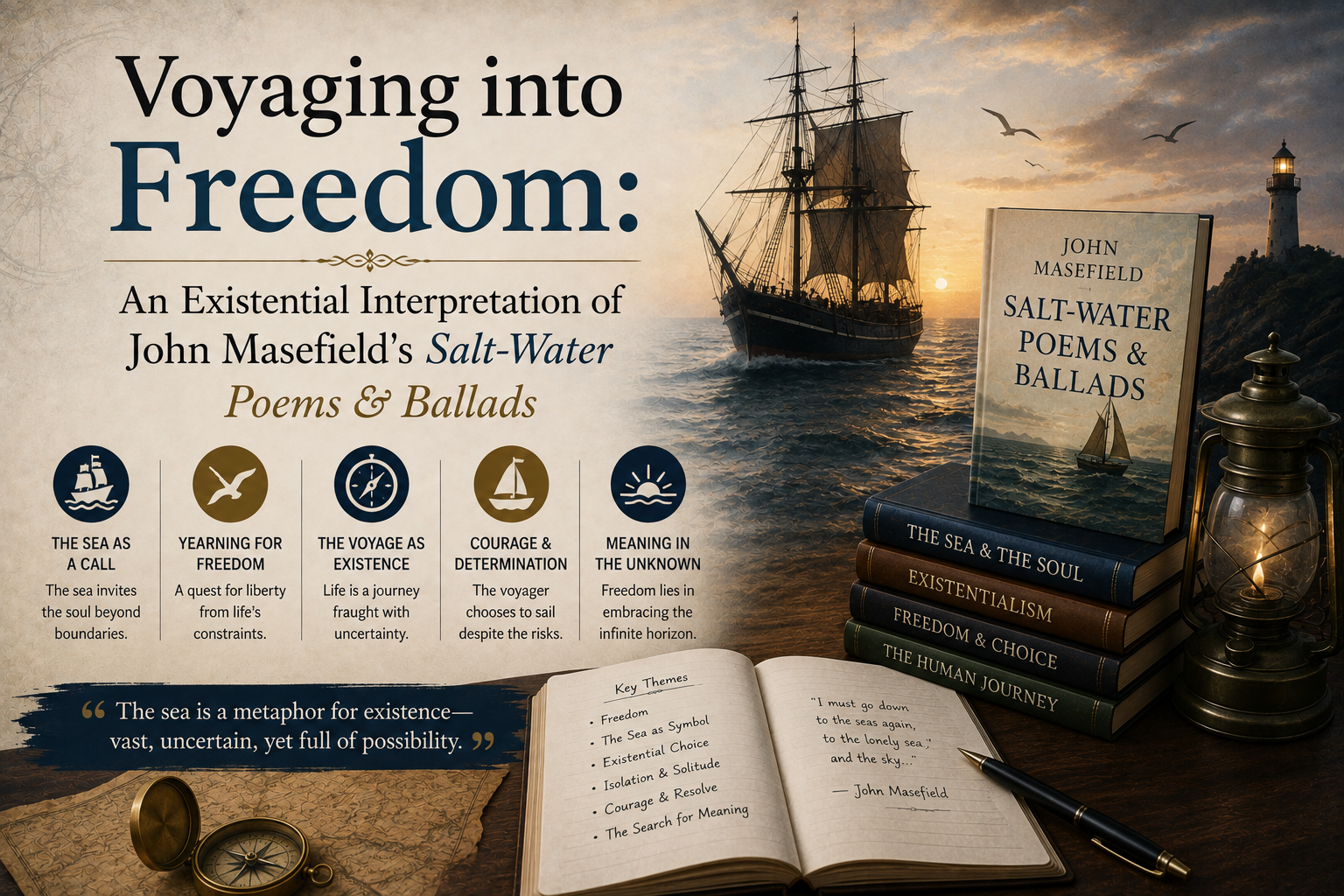
This paper analyzes John Masefield's (1902) collection of poems, Salt-Water Pomes & Ballads through an existential framework which goes beyond its basic interpretation of the sea as a natural environment and a location for maritime work. The sea is portrayed as a symbolic space through which we can examine the fundamental elements of human existence which include self-identity, personal desires and development of broader essential freedoms. The narrator exists through his continuous desire to see the ocean which creates a powerful need to explore existence through his own personal decisions which lead to his emotional satisfaction. He chooses to take on uncertain situations because he thinks that true happiness comes from experiencing life through challenging experiences. The sea embodies two opposing aspects and offers people existential choices while they must confront their most difficult contests. People must acquire ambition and will to overcome natural elements of wind, waves and storms because they want to fulfill their existential duty which requires them to make commitments to other people. Masefield's musical patterns and his powerful visual details and his basic elemental vocabulary create a strong philosophical connection which turns his sea poems and ballads into a reflective analysis of human decision making and personal identity and the search for meaningful existence.
Downloads
Published
How to Cite
Issue
Section
License
Copyright (c) 2026 Dr. Malik Mujeeb-ur-Rahman, Mirub Iqbal

This work is licensed under a Creative Commons Attribution 4.0 International License.