Blue Economy Investment Funds: Opportunities and Challenges for Maritime Sector Growth
DOI:
https://doi.org/10.63056/jllsa.2.8.2026.248Keywords:
blue economy, blue finance, investment funds, maritime sector, blue bonds, blended finance, ocean investment, sustainable finance, natural capital, maritime policyAbstract
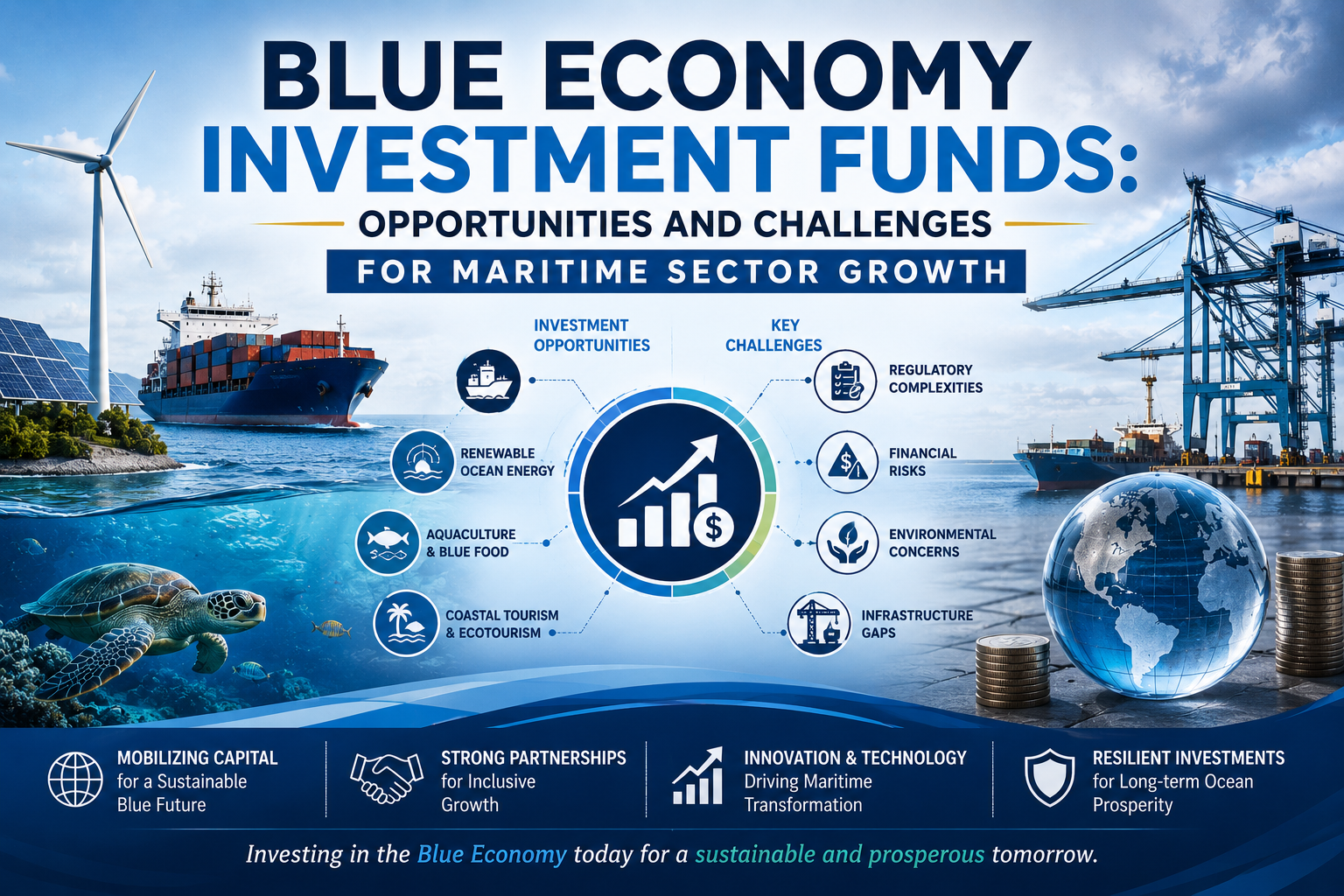
The expansion of the blue economy has intensified interest in financial mechanisms capable of mobilising private and institutional capital for sustainable maritime development. Blue economy investment funds have emerged as potentially important vehicles for financing ports, clean shipping, offshore renewable energy, sustainable aquaculture and fisheries, coastal tourism, marine biotechnology, ecosystem restoration and related maritime infrastructure. Unlike individual blue bonds or project loans, investment funds can pool capital across multiple assets, technologies and jurisdictions, potentially diversifying risk, aggregating projects and providing patient capital to sectors whose investment horizons often exceed those preferred by conventional financiers. This paper examines the opportunities and challenges associated with blue economy investment funds and assesses their potential contribution to maritime sector growth. A structured integrative review of peer-reviewed research and authoritative policy literature published through 2026 is employed, with particular attention to recent scholarship on blue bonds, natural-capital markets, fisheries finance, ocean governance and sustainability measurement. The findings identify six principal opportunities: closing maritime investment gaps; facilitating portfolio diversification and project aggregation; accelerating technological transition and maritime decarbonisation; mobilising blended finance; supporting coastal enterprises and employment; and creating financial value from ecosystem services. However, significant constraints remain. These include the absence of a universally accepted blue-finance taxonomy, limited pipelines of investment-ready projects, information asymmetry, long project payback periods, environmental-impact measurement difficulties, regulatory fragmentation, currency and political risks, bluewashing and the potential exclusion of coastal communities. The paper argues that expanding the volume of blue-labelled capital is insufficient. Effective blue economy investment funds require credible eligibility standards, transparent impact measurement, independent verification, appropriate risk-sharing structures, community participation and alignment between financial returns and long-term ecological carrying capacity. A policy framework is proposed in which public finance absorbs selected early-stage risks while private capital finances commercially viable maritime activities under robust environmental and social safeguards. The study concludes that well-designed investment funds can become significant catalysts of sustainable maritime growth, but poorly governed funds risk converting the blue economy into a financial label without producing commensurate ocean or societal benefits.
Downloads
Published
How to Cite
Issue
Section
License
Copyright (c) 2026 Danish Aman, Syed Waqar Hasan Zaidi

This work is licensed under a Creative Commons Attribution 4.0 International License.