SCO, Heart of Asia, and SAARC: Regional Multilateralism as a Framework for Pak-Afghan Normalization
DOI:
https://doi.org/10.63056/jllsa.2.2.2026.254Keywords:
SCO, Heart of Asia–Istanbul Process, SAARC, Pakistan–Afghanistan relations, regional multilateralismAbstract
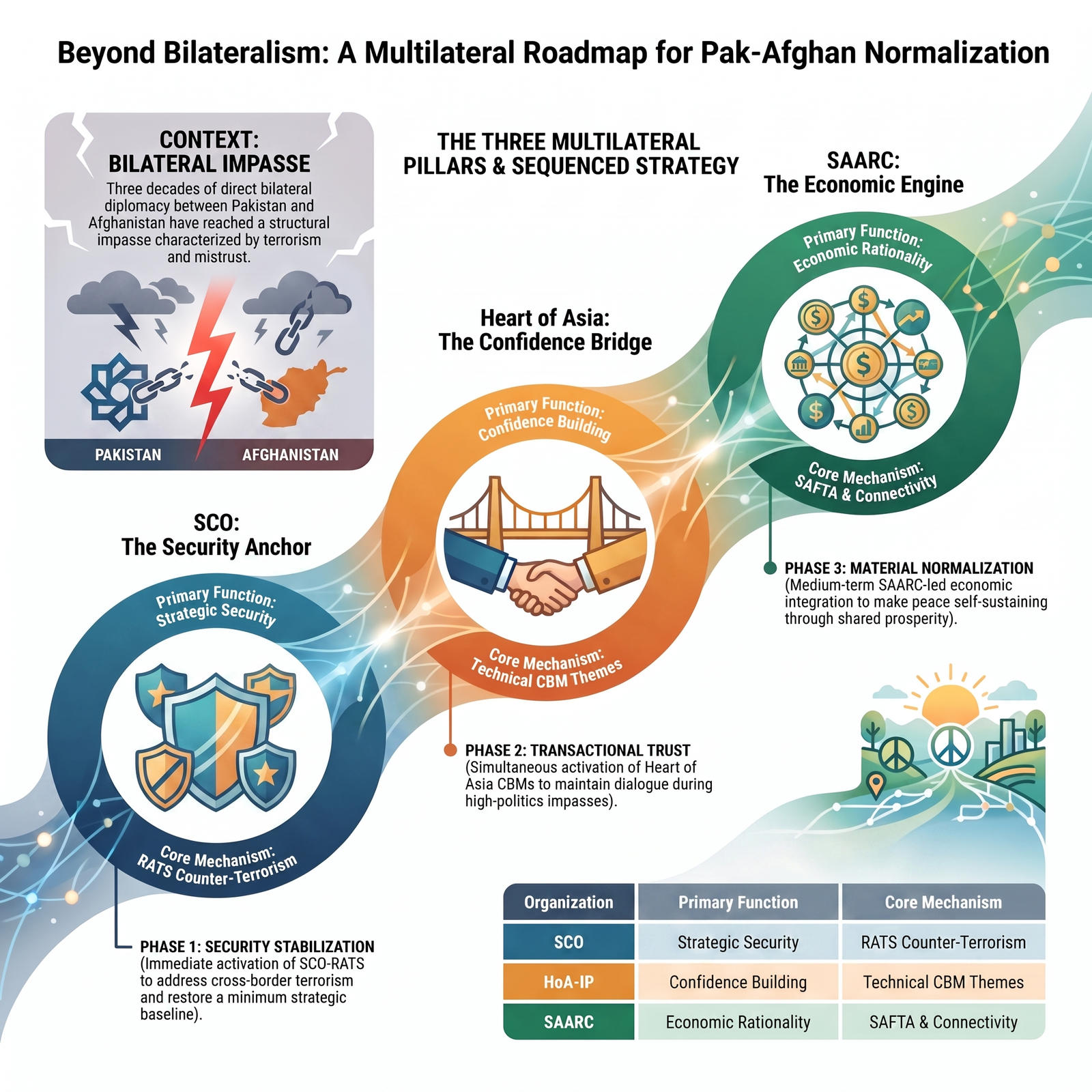
Pakistan–Afghanistan bilateral relations have reached a structural impasse. Three decades of direct engagement, mediated through support for successive Afghan factions, the 'double game' of the War on Terror period, and post-2021 Taliban diplomacy, have produced intensifying terrorism, contested borders, diplomatic rupture, and mutual strategic mistrust of a depth that bilateral normalization efforts alone are unlikely to overcome. This paper argues that three regional multilateral frameworks, the Shanghai Cooperation Organisation (SCO), the Heart of Asia–Istanbul Process (HoA-IP), and the South Asian Association for Regional Cooperation (SAARC), offer underutilized structural resources for Pak-Afghan normalization that bilateral diplomacy cannot replicate. Drawing on liberal institutionalist theory, security community theory, and neofunctionalist integration theory, and employing a qualitative comparative institutional analysis grounded in primary document review and secondary scholarship, the paper argues that the three frameworks are not alternatives but complements: the SCO provides the security-normalization channel suited to the current Taliban-governed Afghan state; the Heart of Asia Process offers a confidence-building bridge specifically designed for Afghanistan's regional reintegration; and SAARC, despite its well-documented limitations, supplies an economic incentive architecture that can make normalization materially rational for both Pakistani and Afghan elites. The paper concludes with a sequenced multilateral engagement strategy and targeted institutional reform recommendations.
Downloads
Published
How to Cite
Issue
Section
License
Copyright (c) 2026 Muhammad Tariq, Dr. Kareem Khan

This work is licensed under a Creative Commons Attribution 4.0 International License.