Dystopian Futures and Climate Crisis in South Asia: An Ecocritical Reading of The City Inside by Samit Basu
DOI:
https://doi.org/10.63056/jllsa.2.2.2026.265Keywords:
climate change, South Asia, ecocriticism, dystopian fiction, environmental humanitiesAbstract
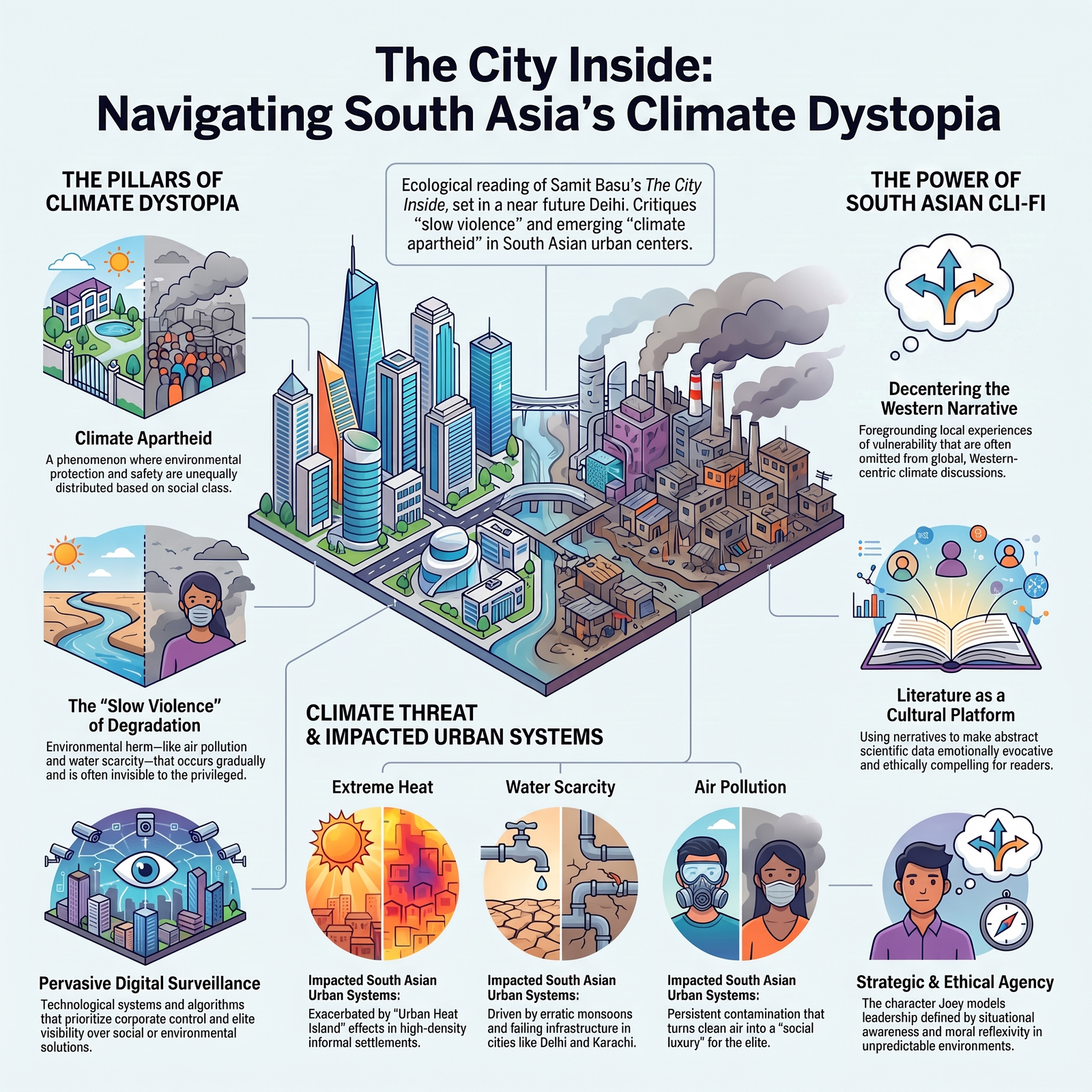
Climate change has become a critical crisis of the twenty-first century, which is particularly disproportionately impacting vulnerable areas like South Asia. The urbanization, population growth, poverty and fragility of infrastructure have exacerbated the situation in these areas. This challenge is well documented in the scientific and policy-making literature and it is in this literature that a narrative space exists to make the abstract information on the environment “emotionally evocative” and “ethically compelling. The City Inside by Samit Basu is an ecocritical analysis of a text that has received no systematic scholarly attention from any scholar in this genre of analysis in South Asian literary literature so far. With the help of qualitative textual analysis, inspired by interpretivism, the paper sets out to achieve three broad objectives: to discuss the theme of climate change and the social rates in the novel; to explore how the dystopian features mirror the environmental and political crisis in the South Asian context; to analyse its critique of ecological inequities and state control mechanisms. According to the findings, it is suggested that the novel is a cultural diagnosis as well as a political commentary on the climate crisis and an indictment of global environmental injustice in the urban South Asian context. This study contributes to the climate fiction research by placing the work of Samit Basu in the context of postcolonial ecocriticism and the environmental humanities more generally, and by emphasizing the importance of literature in developing environmental awareness and active participation in the Anthropocene.
Downloads
Published
How to Cite
Issue
Section
License
Copyright (c) 2026 Muhammad Rizwan, Muhammad Umair

This work is licensed under a Creative Commons Attribution 4.0 International License.