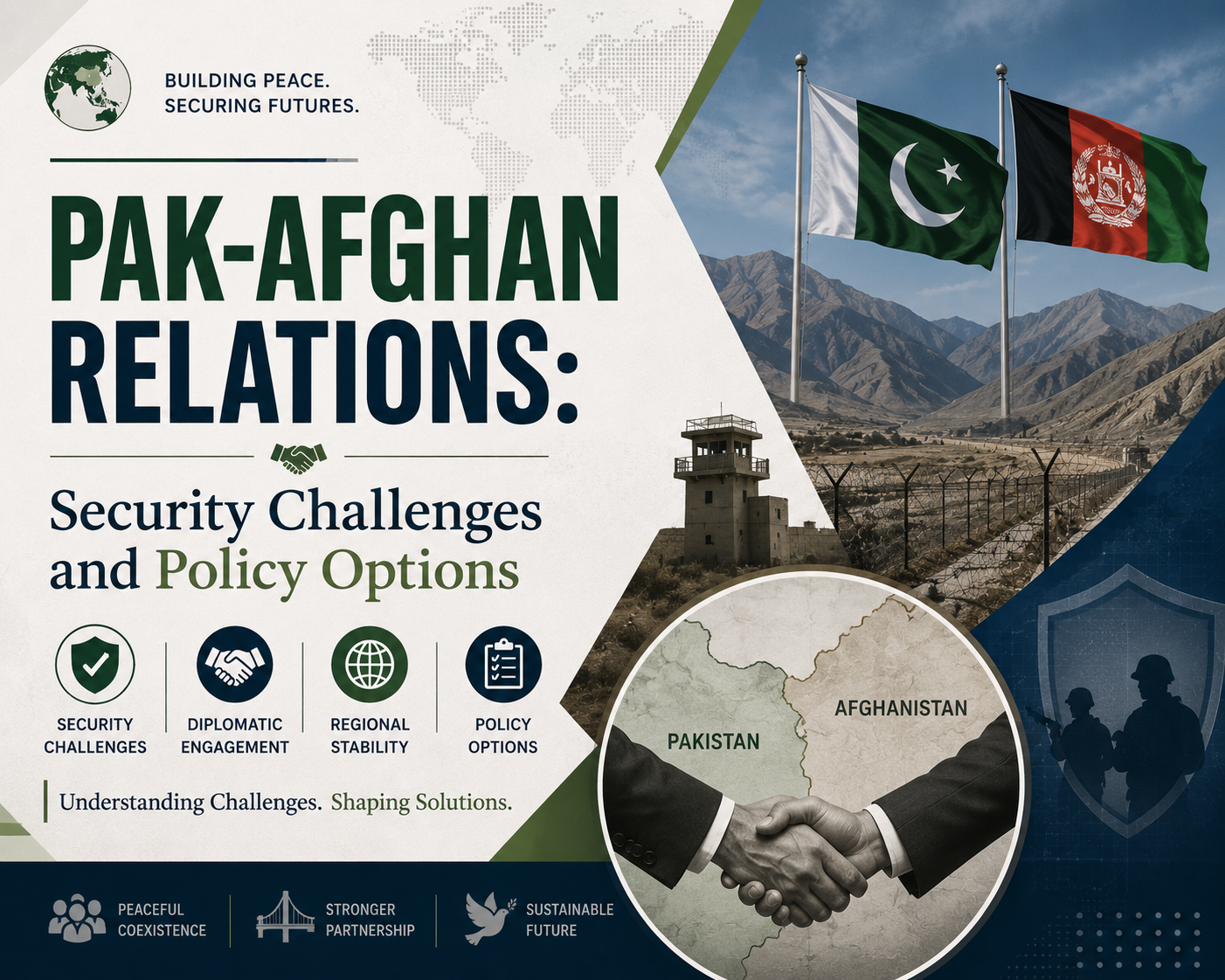
Pak-Afghan Relations: Security Challenges and Policy Options
DOI:
https://doi.org/10.63056/jllsa.2.6.2026.275Keywords:
Pakistan–Afghanistan Relations, Security Challenges, Durand Line, Cross-Border Terrorism, TTP, Refugees, Border Management, Regional SecurityAbstract
This study examines Pakistan–Afghanistan relations with particular focus on major security challenges and policy options for long-term stability. Historical, political, territorial, ethnic, and geopolitical factors, such as the Durand Line dispute, Tehrik-i-Taliban Pakistan (TTP) terrorism, cross-border terrorism, refugee flows, border management, and regional competition have all played a role in shaping the relationship. The research method is qualitative, with historical analysis and comparative analysis. This study used case study design to analyze relations between the two states. The findings indicate that mistrust, long-term territorial issues, militancy, geopolitical competition, and institutional cooperation deficits are significant challenges to good relations. While the fences and counterterrorism measures have enhanced security management, they have not eliminated political tensions. There is a need for greater diplomacy, cooperation on counterterrorism, border management, economic integration, and confidence-building measures for sustainable stability.
Downloads
Published
How to Cite
Issue
Section
License
Copyright (c) 2026 Mehak Rimsha, Zeeshan Khan, Kashif Zaheer

This work is licensed under a Creative Commons Attribution 4.0 International License.