The Socio-Cultural Dimensions of Pak-Afghan Border Geopolitics: Cross-Cultural Interactions and Peer Influence of Afghan Refugee Children in Pakistan
DOI:
https://doi.org/10.63056/jllsa.2.4.2026.280Keywords:
Pak-Afghan Border Geopolitics, durand line, interministerial refugee management taskforce, one document regime ODR, Chaman, Torkham, UNHCR, Pakistan army, Iran’s ministry of labourAbstract
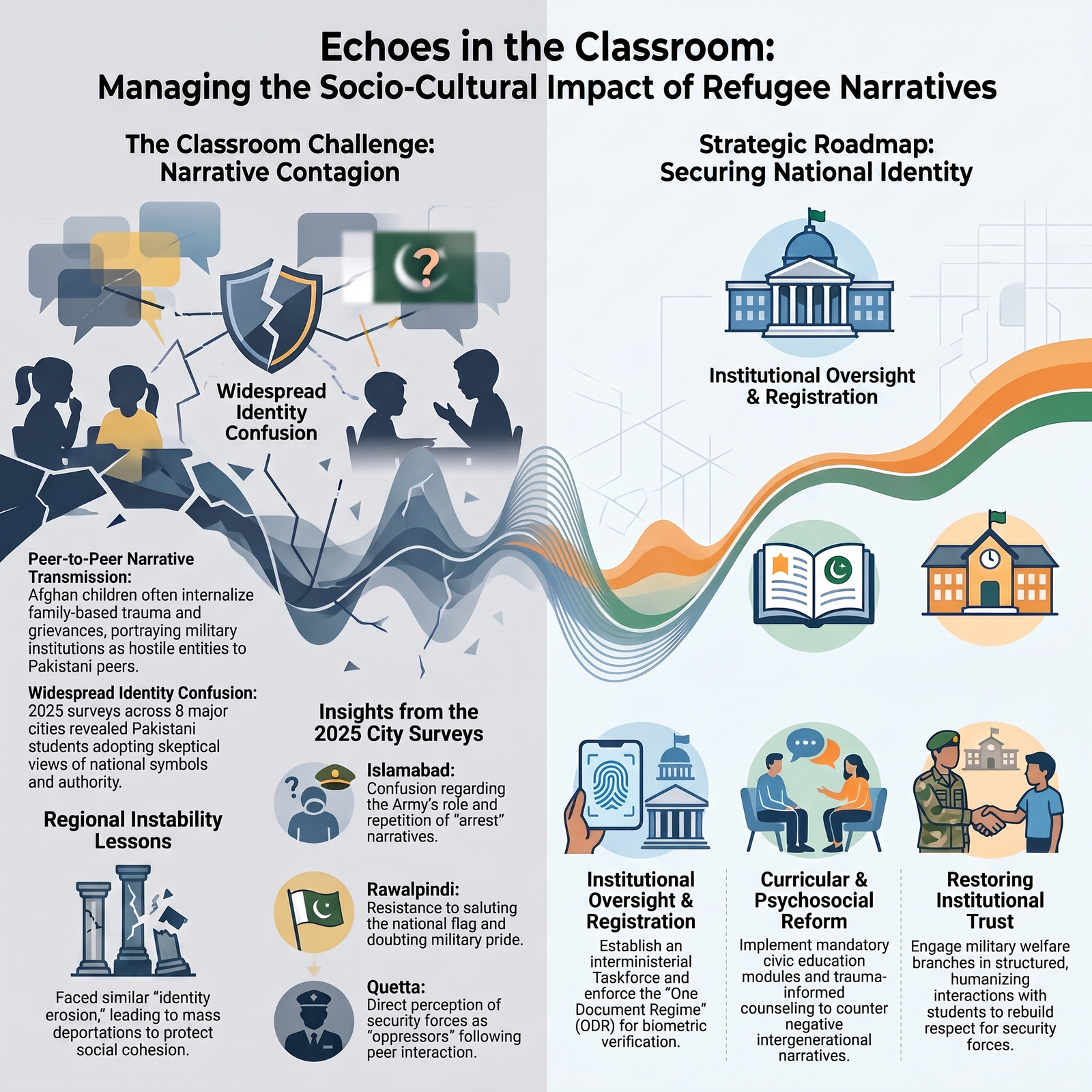
The porous and long-contested Pak-Afghan border has, for over four decades, functioned as more than a security and administrative frontier; it has been a socio-cultural conduit through which populations, languages, kinship networks and, increasingly, refugee flows move between the two states. Afghan refugee children have been studying in Pakistani schools for decades, entering local institutions through flexible admission practices, community pressure, and at times informal enrolments in both private and government schools, especially in urban centres. Their presence in classrooms has shaped the learning environment of Pakistani students up to grade five, influencing behaviours, attitudes and perceptions in ways that are not always constructive. Cross-cultural interaction at such a formative stage has significant psychological effects, generating either positive values of diversity and empathy or negative outcomes such as confusion, imitation of inappropriate practices, and mistrust towards national institutions. A recurring concern is how Afghan children, despite receiving shelter, education and basic necessities from Pakistan, often portray a negative image of the Pakistan Army, an institution strongly tied to national identity, border security and territorial sovereignty in the minds of Pakistani children. This study therefore situates classroom-level cross-cultural interaction within the broader socio-cultural dimensions of Pak-Afghan border geopolitics, investigating the extent to which Afghan students have influenced classroom culture, how their peer interactions affect the perceptions of the Pakistan Army, and what mindset has been shaped among Pakistani students exposed to these dynamics. The literature review builds on seminars and discussions held between January and September 2025 across Islamabad, Khyber Pakhtunkhwa, Balochistan and Punjab, which highlighted recurring themes of cultural misunderstanding, peer pressure and gaps in institutional oversight of school integration policies along and beyond the border belt. The findings point towards both subtle and overt impacts of these interactions, raising critical questions about how early childhood education in Pakistan manages cross-cultural exposure and how national narratives are internalised or challenged in a socio-cultural landscape shaped by border geopolitics. Recommendations have been finalised as per the experiences of Iran and Tajikistan in this regard.
Downloads
Published
How to Cite
Issue
Section
License
Copyright (c) 2026 Muhammad Aftab Khan, Dr. Muhammad Asim

This work is licensed under a Creative Commons Attribution 4.0 International License.