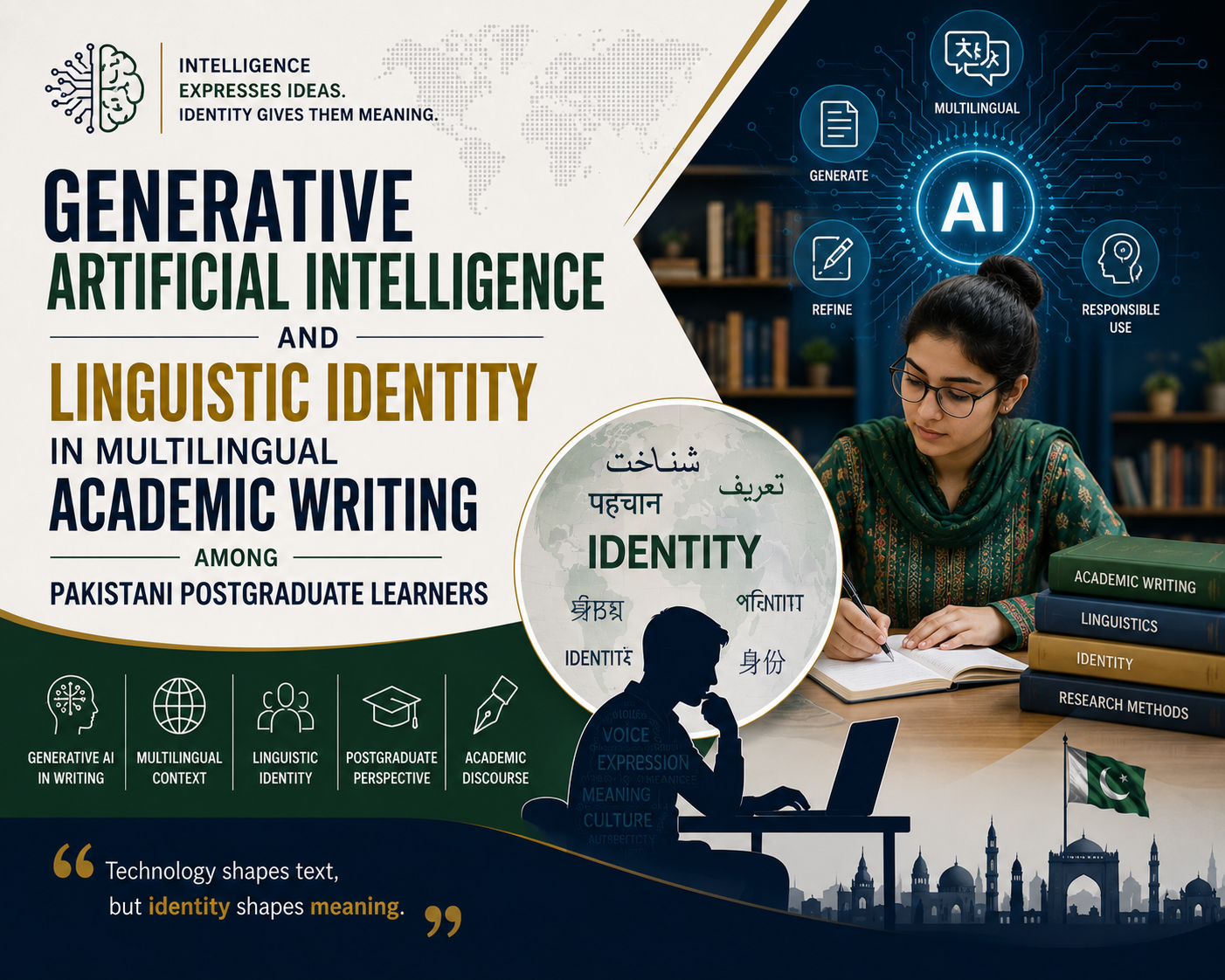
Generative Artificial Intelligence and Linguistic Identity in Multilingual Academic Writing among Pakistani Postgraduate Learners
DOI:
https://doi.org/10.63056/jllsa.2.5.2026.282Keywords:
generative artificial intelligence, linguistic identity, multilingual academic writing, translingual agency, authorial voice, ESL/EAL postgraduate writers, PakistanAbstract
Generative artificial intelligence (GenAI) is transforming academic writing; however, its implications for the linguistic identity and authorial ownership of multilingual writers remain insufficiently understood, particularly in South Asian higher education. This cross-sectional correlational study examined the relationships among GenAI dependence, perceived linguistic identity erosion, and translingual agency among 92 university-level students. Data were collected using the newly developed 27-item Generative AI and Linguistic Identity Inventory (GAILI-27), comprising three nine-item subscales measured on a five-point Likert scale. The subscales demonstrated satisfactory internal consistency, with Cronbach's alpha values ranging from .847 to .877 and McDonald's omega values ranging from .882 to .903. GenAI dependence was positively associated with perceived linguistic identity erosion (r = .43, p < .001), whereas translingual agency was negatively associated with identity erosion (r = -.46, p < .001) and dependence (r = -.37, p < .001). These findings indicate that identity-related risk may depend less on how frequently multilingual writers use GenAI than on whether they critically evaluate, revise, and retain authority over machine-generated text. Because the evidence was cross-sectional and self-reported, causal conclusions are not warranted. Higher education institutions should therefore complement academic-integrity policies with explicit instruction in critical GenAI literacy and translingual agency.
Downloads
Published
How to Cite
Issue
Section
License
Copyright (c) 2026 Muhammad Aslam Khan, Dr. Muhammad Akram

This work is licensed under a Creative Commons Attribution 4.0 International License.