To Examine How the Namesake Represents Cultural Pluralism, Tolerance, and Peaceful Coexistence as Possible Responses to Cultural Difference in the Contemporary World
DOI:
https://doi.org/10.63056/jllsa.2.9.2026.302Keywords:
Peaceful coexistence, cultural pluralism, The Namesake, Indian, American, Gangauli family, migrationAbstract
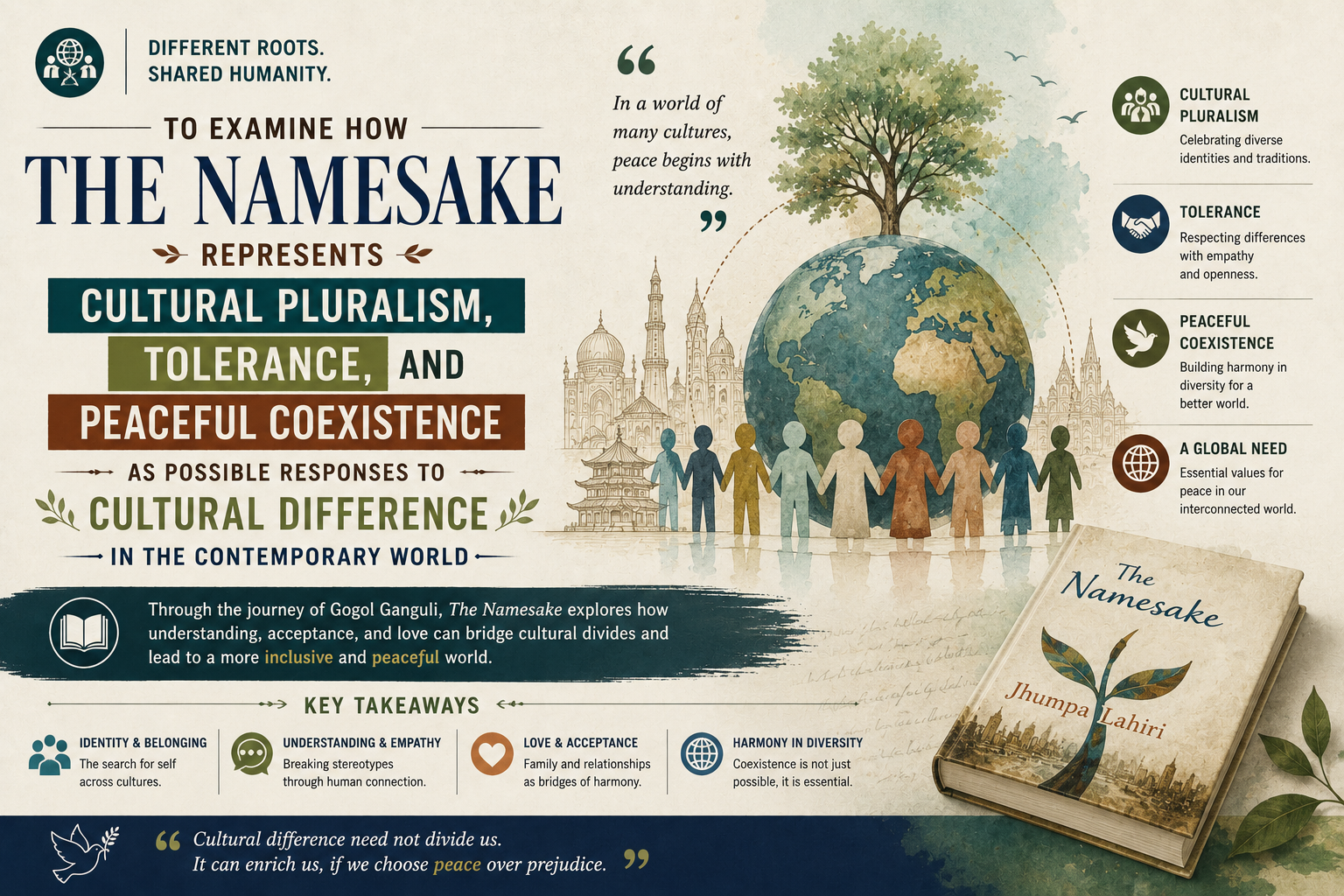
This study uncovers the idea of cultural pluralism and peaceful coexistence in Jhumpa Lahiri’s novel The Namesake (2003). Horace Meyer Kallen’s cultural pluralism also recognize and appreciate the coexistence of diverse cultural groups within society as its theoretical foundation. This study used qualitative method of research and textual analysis. In order to explain this idea, everything was observed and examined from this novel. Through the experiences of the Ganguli family, The Namesake examines the effects of cultural diversity on society, the characters' exposure to various cultures, and the significance of cultural pluralism in the contemporary world. This viewpoint is particularly relatable in the worldwide world of today, as migration and cultural interaction continue to influence our social and private lives. Gogol's son is likely to grow up in a world where his cultural identity is more flexible and changeable at the end of novel, highlighting the continued significance of cultural heterogeneity in forming identities in the contemporary world. This study emphasizes all three components of harmonious coexistence like tolerance, be forgiving, and seek justice. It examines the positive effects of cultural diversity in Lahiri's The Namesake novel and to emphasize the value of cultural pluralism in the modern world as it is portrayed in the novel have all been accomplished.
Downloads
Published
How to Cite
Issue
Section
License
Copyright (c) 2026 Javeria Baloch, Sana Bhurt, Subhan Ullah

This work is licensed under a Creative Commons Attribution 4.0 International License.