Preserving Indigenous Weaving Techniques and Motifs through Digital Archiving and Sustainable Modern Adaptation
DOI:
https://doi.org/10.63056/jllsa.2.9.2026.303Keywords:
indigenous weaving, digital archiving, traditional motifs, cultural heritage, digital preservation, intergenerational learning, sustainable adaptation, traditional knowledge, community participation, cultural sustainabilityAbstract
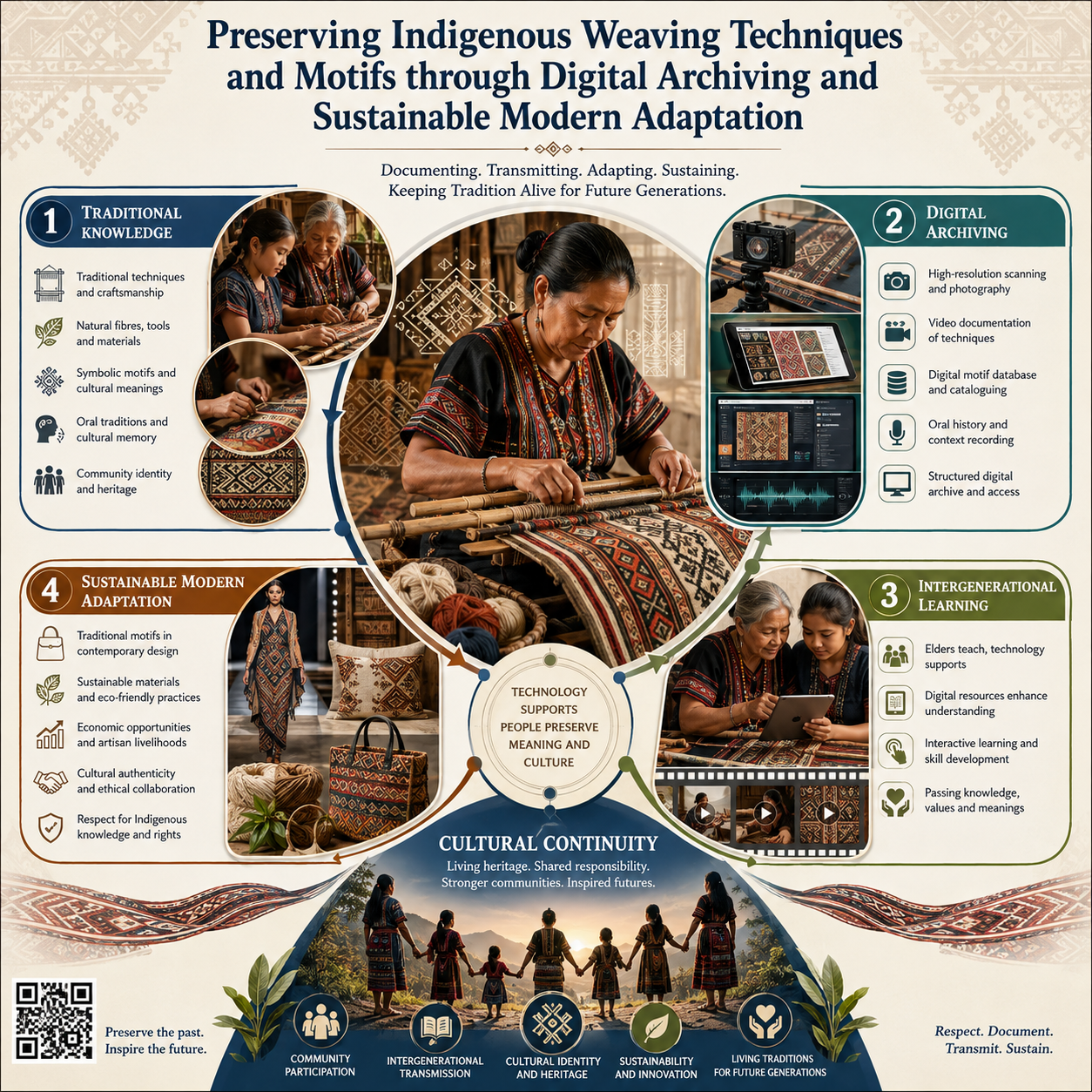
The study focuses on the adaptation of traditional weaving skills and patterns by using digital means and modern materials. Weaving skills and products are a significant cultural heritage that involve physical material, skill, meaning, symbolism, oral transmission and a sense of community identity and intergenerational transmission. But, this continuity can be threatened if there are fewer opportunities for documentation and transmission of the specialized knowledge, and if it is dependent upon skilled individuals. The study takes a qualitative and exploratory design that examines the role of digital archiving in documenting weaving techniques and motifs, how digital technologies can support the documentation and intergenerational transmission of Indigenous weaving knowledge and practices, and how digital archiving and sustainable modern adaptation can help to long-term preserve and keep Indigenous weaving knowledge and practices relevant. The findings suggest that digital tools such as digital databases, visual documentation, video recordings, interactive systems, and other innovative tools can be used to enhance the preservation of both technical and visual elements of weaving, when integrated with the information about the meanings involved and the community’s context. The study also reveals that digital resources have the potential to enhance access and learning for younger people, but not at the expense of the direct teaching of knowledge from artisans and community elders. Sustainable modern adaptation can also help to ensure the continuity of culture by providing opportunities for traditional weaving skills and motifs to be relevant to modern design and the economic situation, while respecting cultural authenticity, participation, ethical collaboration and the rights of Indigenous knowledge holders. The study suggests that a community-based, integrated, and holistic approach to the long-term preservation of Indigenous weaving should draw on the elements of digital documentation, intergenerational learning, cultural sensitivity, and sustainable innovation in order to ensure the weaving traditions are lived and meaningful cultural practices that can be enjoyed by future generations.
Downloads
Published
How to Cite
Issue
Section
License
Copyright (c) 2026 Anam Saeed, Sadaf Amin, Mahrukh Khan

This work is licensed under a Creative Commons Attribution 4.0 International License.