A Corpus-Based Comparative Analysis of Modality Based Verbs in Pakistani And British Newspapers As The Stance Markers In Different Cultures
DOI:
https://doi.org/10.63056/jllsa.2.9.2026.311Keywords:
modal verbs, corpus, editorials, Pakistani English newspapers, British newspaperAbstract
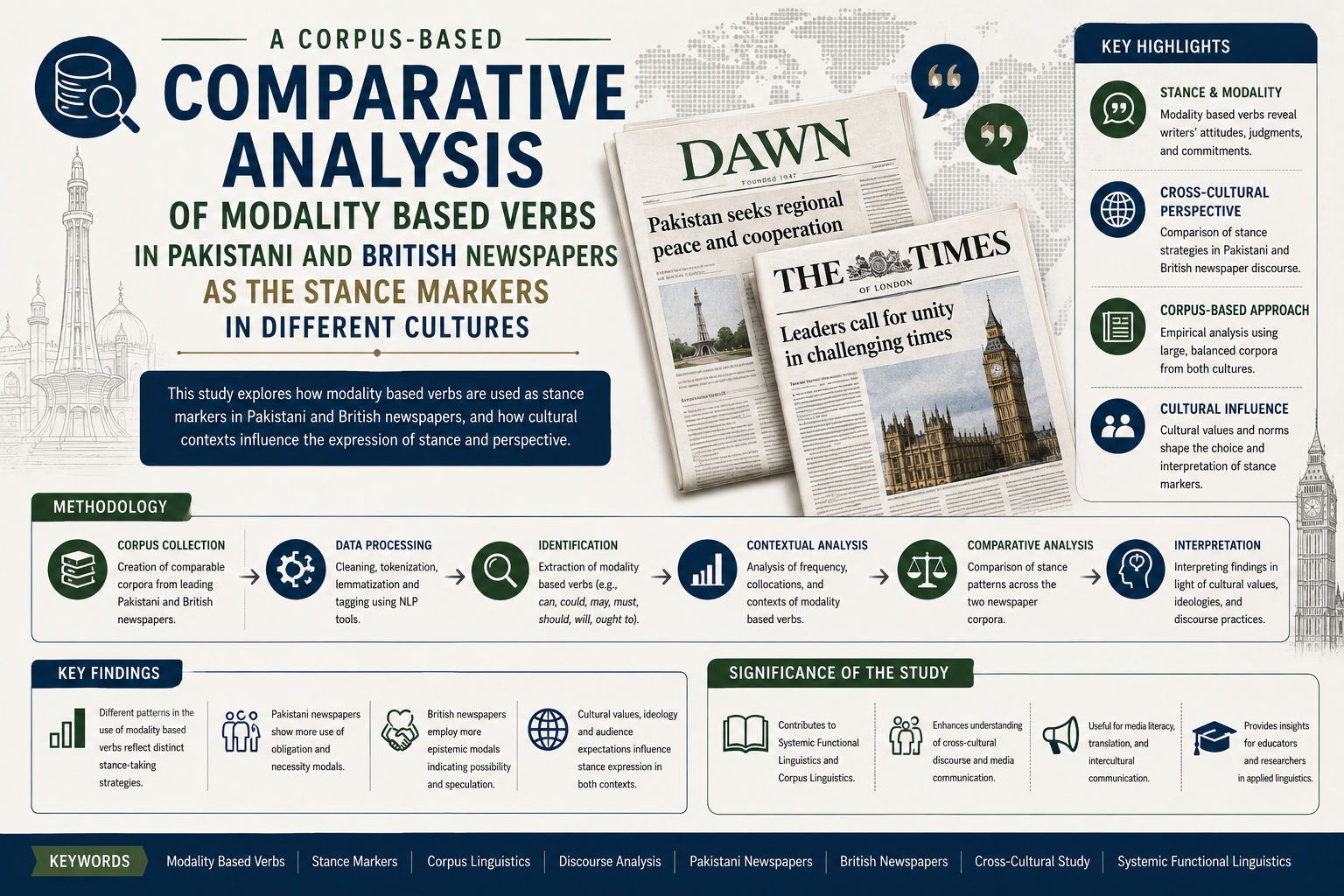
A common grammatical term in the editorial section of newspapers is modality. The primary emphasis of this research is the structure and function of English "Modals." Second, it reveals the editors' most commonly used modal verbs. Also examined is how newspapers in Pakistani English and British newspapers use modal verbs to influence their readers' opinions on specific topics. Modality is an essential linguistic phrase that appears in practically every newspaper, and modal verbs are employed to convey it. Antconc, a corpus tool, was used to analyze the editorial corpus created for this study, which included editorials from both newspapers. A content analysis was performed for the usage of modal verbs. The Daily Sun editorial writers employ more predictive modal verbs like will and would, according to the study. When it comes to mandatory modal verbs like "must" and "should," the editorial writers at The Nation employ a higher number. They also employ more modal verbs like "may" and "might" to describe the possibility and ability to do something. According to the news organization's predictive mode, the greatest worry of editorial writers was to anticipate "what will/would happen" in the future.
Downloads
Published
How to Cite
Issue
Section
License
Copyright (c) 2026 Marya Sarwar, Dr. Muhammad Asim Mahmood, Atif Saleem Tahir

This work is licensed under a Creative Commons Attribution 4.0 International License.