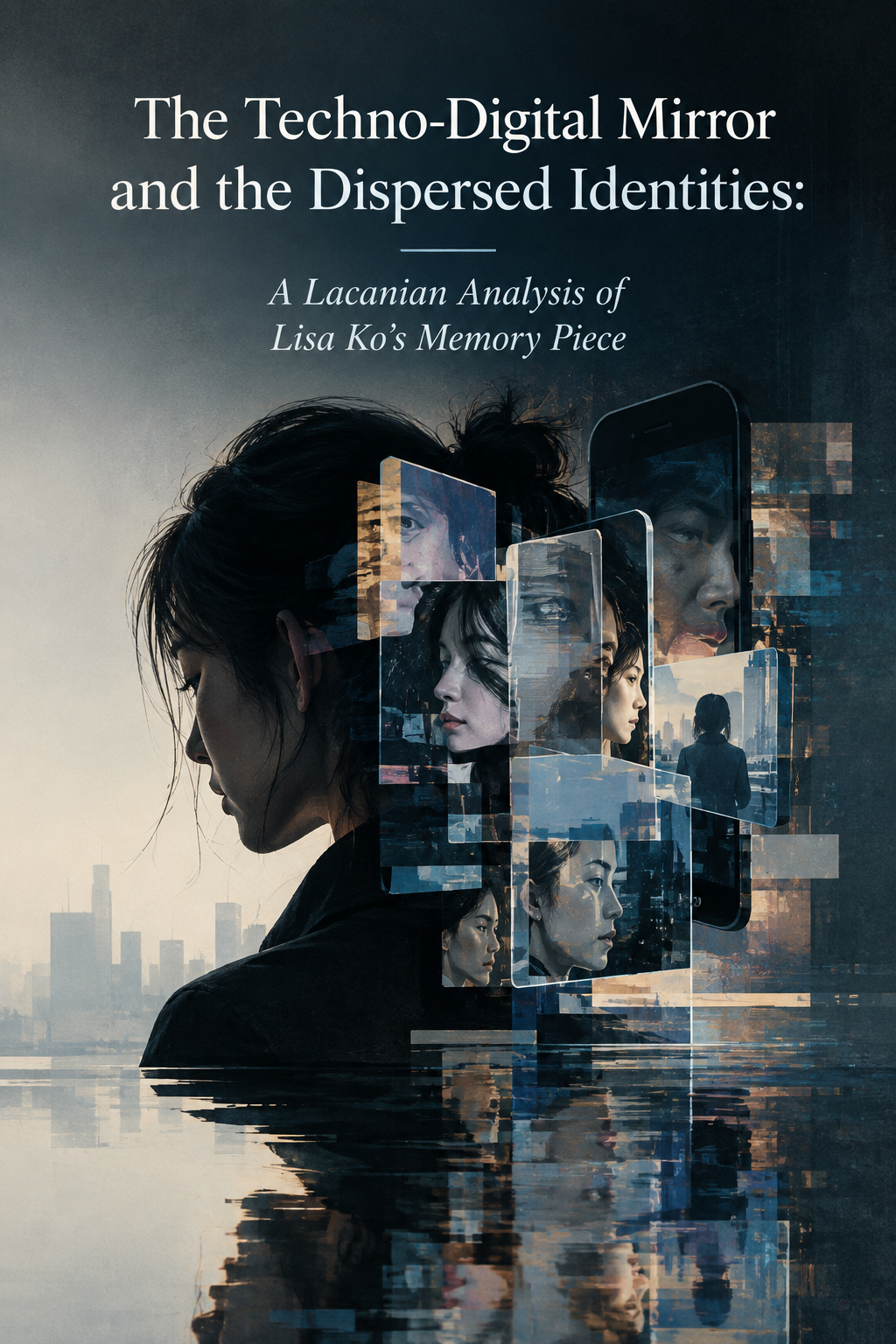
The Techno-Digital Mirror and the Dispersed Identities: A Lacanian Analysis of Lisa Ko’s Memory Piece
DOI:
https://doi.org/10.63056/jllsa.2.9.2026.331Keywords:
Lacan, Lisa Ko, Memory Piece, externalised memory, digital capitalism, fragmented subjectivityAbstract
The present research focused on the connection between techno-digital mediation, externalized memory and fragmented subjectivity in Lisa Ko's Memory Piece (2024) using the theoretical approach of Jacques Lacan's psychoanalysis. The research was conducted in a qualitative hermeneutic manner, in which digital archives, surveillance and algorithmic structures were examined in the way in which memory has become an externalized technological phenomenon. This study used the Lacanian concepts of the Mirror Stage, the Big Other, the Imaginary, the Symbolic, the Real, and repetition compulsion to discuss the experiences of the main characters of the novel. The results indicated that digital systems served as symbolic authorities which shaped identity, memory and emotional experience in the context of digital capitalism. The analysis also revealed an increased fragmentation of subjectivity, emotional alienation and repetitive uses of digital technology. In addition, the study revealed the way surveillance capitalism made memory, desire and human interaction into commodities of the algorithmic control and extraction. The findings indicate that Memory Piece provided a much needed literary portrayal of the psychological effects of digital capitalism and also the potential for resistance through the bodily, human relationship and collective solidarity.
Downloads
Published
How to Cite
Issue
Section
License
Copyright (c) 2026 Nawazish Rasool, Maham Akram

This work is licensed under a Creative Commons Attribution 4.0 International License.