Semantic Representation of Death and Despair in Sylvia Plath's "November Graveyard". A Lexical, Connotative, and Semantic Field Analysis
DOI:
https://doi.org/10.63056/jllsa.2.11.2026.424Keywords:
semantic analysis, lexical semantics, connotation, semantic fields, death, despair, semantic negationAbstract
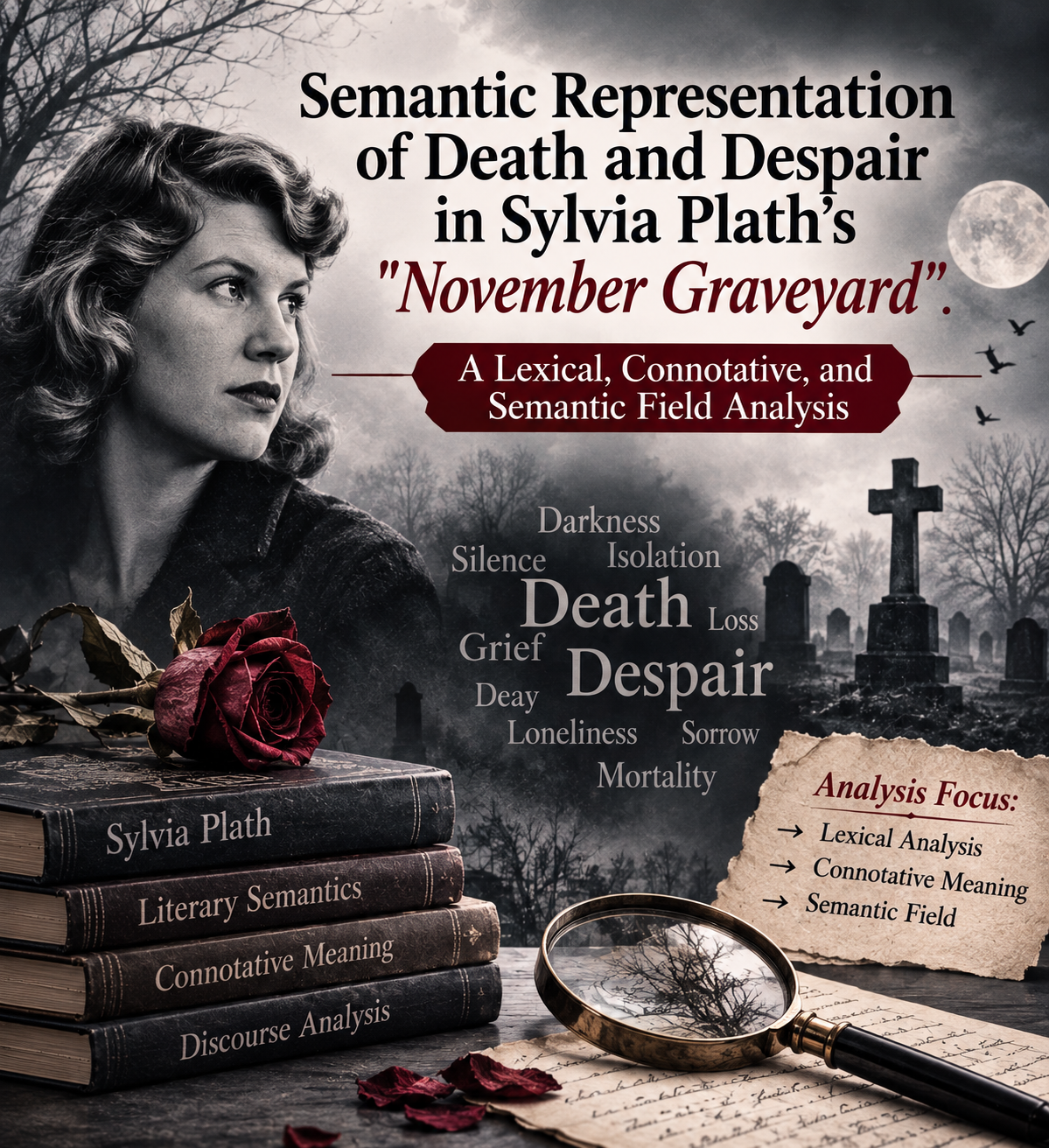
In this article a comprehensive semantic analysis of Sylvia Plath’s poem “November Graveyard” (1956) is presented. The core of the article is a discussion of how the poet uses language to produce a lasting representation of death, despair and existential denial. A close reading of the vocabulary of “November Graveyard” is offered in order to see how the poet uses a very large number of denotatively very ‘rich’ words that are at the same time also very ‘charged’ in terms of connotation, in a system of interrelated semantic fields. In the final chapter of the article, the results from the individual chapters are summed up and discussed from a more general point of view. The article should be of particular interest to scholars working within the field of literary semantics, as well as to scholars working within the field of Sylvia Plath studies.
Downloads
Published
How to Cite
Issue
Section
License
Copyright (c) 2026 Rabiea Naeem, Hussain Ali

This work is licensed under a Creative Commons Attribution 4.0 International License.