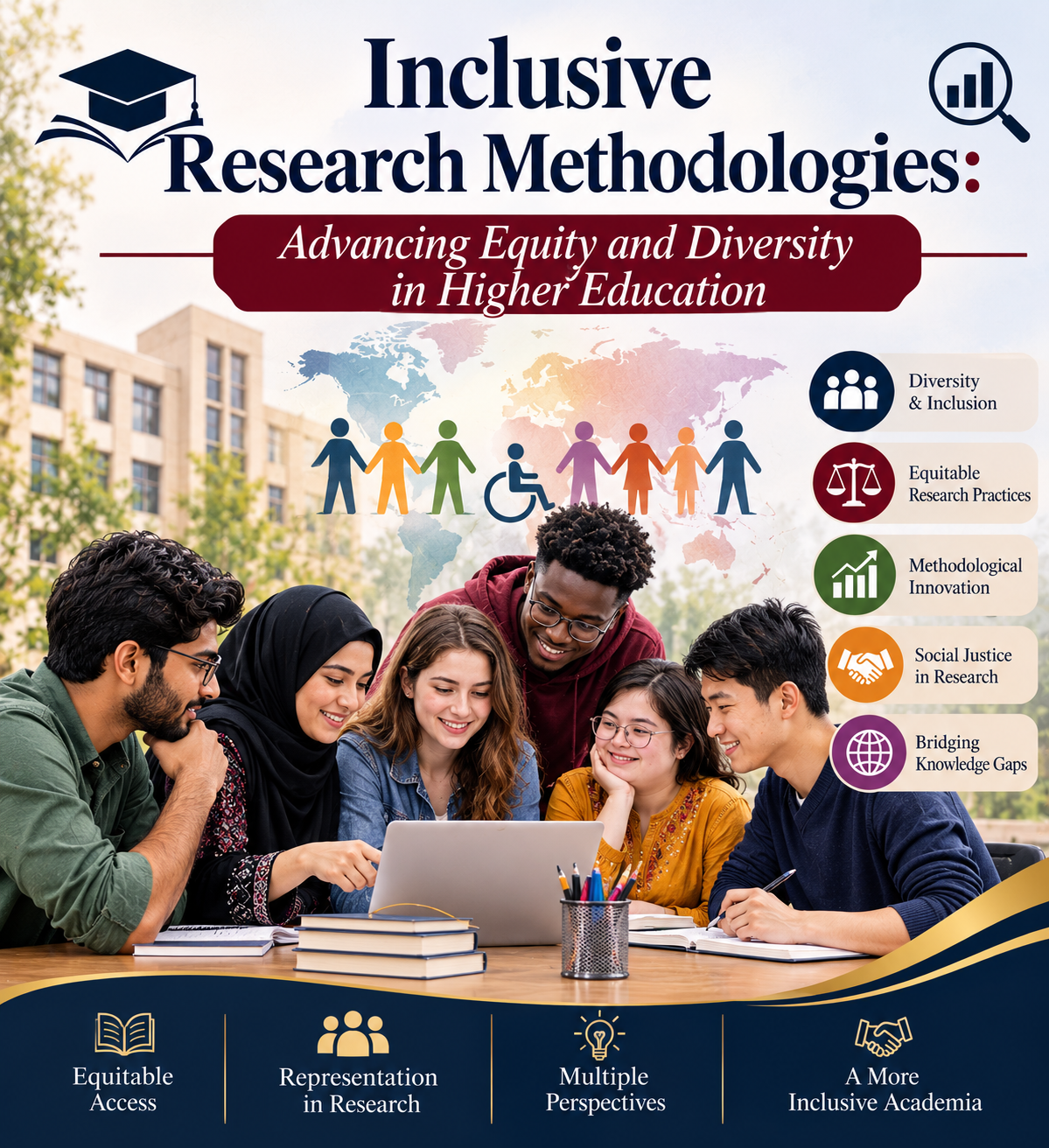
Inclusive Research Methodologies: Advancing Equity and Diversity in Higher Education
DOI:
https://doi.org/10.63056/jllsa.2.11.2026.426Keywords:
Academic Integrity, Diversity, Equity, Higher Education and Inclusive MethodologiesAbstract
The aim of this study was to look at inclusive research methodologies as a means of advancing equity and diversity in higher education. This study was carried out at four Universities of Pakistan, namely, University of the Punjab, Lahore; Quaid-e-Azam University, Islamabad and Rawalpindi; The University of Faisalabad and Lahore College for Women University (LCWU) Lahore. The study centered around the role of methodological inclusivity in academic research's activity towards equitable participation and multiple representation. A mixed-methods research design was employed, combining qualitative interviews with 28 administrators and students and quantitative surveys completed by 210 faculty members. The quantitative results demonstrated that institutions employing inclusive methodological frameworks reported significantly higher levels of equity in student participation, along with stronger representation of marginalized groups in their research projects. Using inclusive methodology as a predictor of equity outcomes (β = .38, p < .001) was statistically significant. This was supported by qualitative data which supports the findings that participatory strategies, culturally responsive designs and transparent data practices are important in supporting diversity. Respondents of the paper pointed out inclusive methods as a way of enhancing the integrity of research findings by reducing bias, ensuring accountability and promoting a sense of commitment to ethical research standards.
The problems found were; small number of teachers being trained, shortage of resources and the nonacceptance of methodological innovations. The study showed that with these challenges inclusive research practices, on the other hand, contributed to equity and diversity, and encouraged integrity or moral principles within institutions of higher learning. The findings help add to the on-going debate on methodological reform and highlight the need to incorporate inclusivity as part of research methodology and practice. The study found inclusive methodologies to be vital to helping promote equity and diversity, and to maintaining sound and ethics-driven higher education scholarship.
Downloads
Published
How to Cite
Issue
Section
License
Copyright (c) 2026 Hina Saleemi, Dr. Nighat Yasmin, Dr. Shazia Ejaz

This work is licensed under a Creative Commons Attribution 4.0 International License.