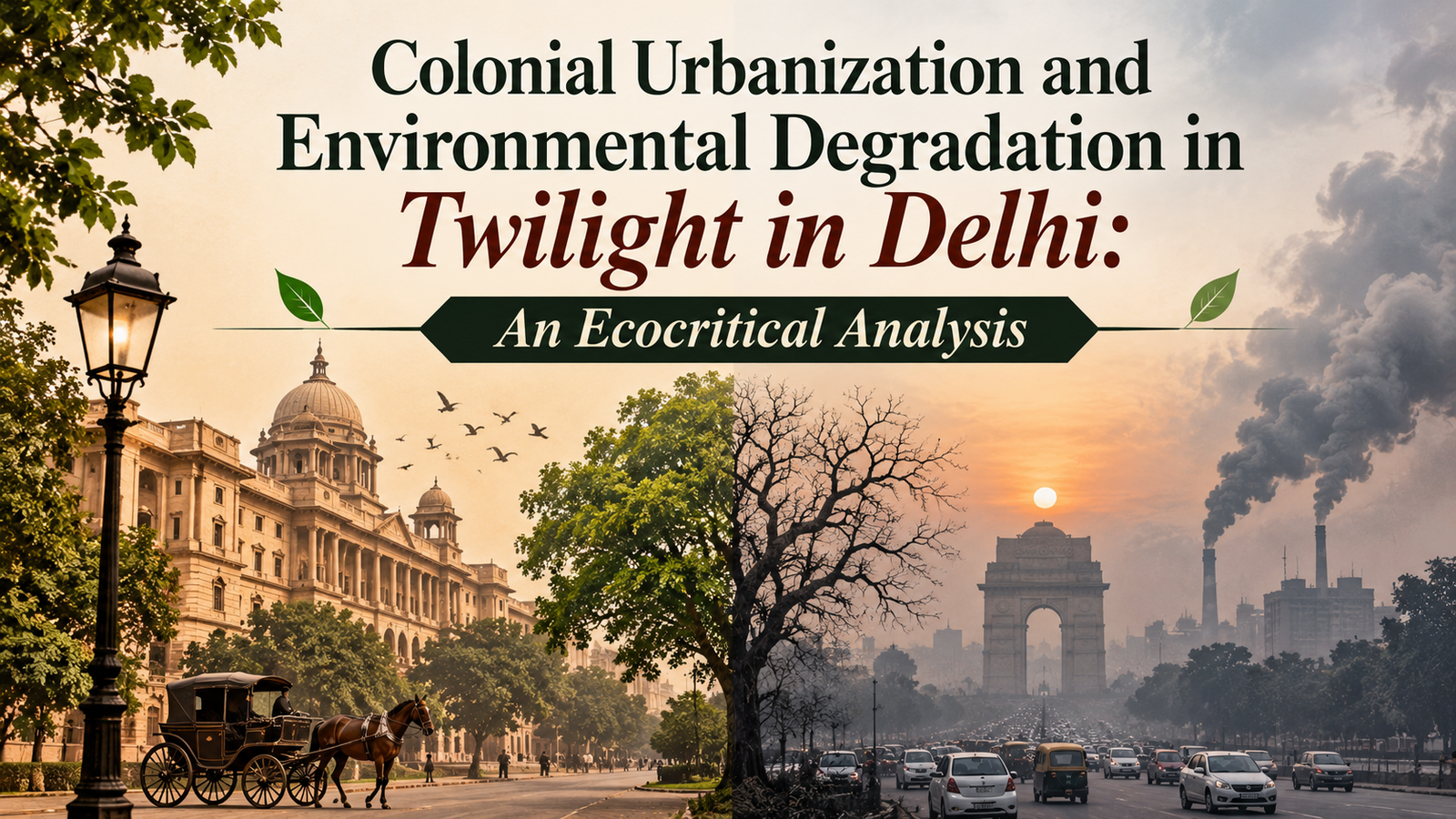
Colonial Urbanization and Environmental Degradation in Twilight in Delhi: An Ecocritical Analysis
DOI:
https://doi.org/10.63056/jllsa.2.11.2026.432Keywords:
Postcolonial Literature, Ecocriticism, Slow Violence, Twilight in Delhi, Colonial urbanization, Environmental degradationAbstract
This article explores the intersection of colonial urbanization and environmental degradation in Twilight in Delhi (1940) by Ahmed Ali through the theoretical framework of Rob Nixon’s concept of slow violence (2011). It examines how British colonial urban planning in early twentieth-century Delhi constituted a gradual, invisible form of ecological violence that disrupted indigenous ecological systems, social relations, and cultural identities. Using a qualitative textual and thematic analysis of few selected passages, the study identifies two major ecocritical themes: colonial urbanization and eco-spirituality. The research integrates ecocritical theory (Garrard, 2012) to demonstrate how Ali’s narrative aesthetic transforms imperceptible environmental degradation into visible literary expression. The environmental dimensions of colonial impact in Twilight in Delhi have received limited scholarly attention within ecocritical frameworks, despite the novel's rich portrayal of ecological transformation alongside cultural decline. By examining how Ali's narrative represents the environmental consequences of British urban planning and infrastructure development in Delhi, this study seeks to illuminate the ways in which colonial urbanization constituted a form of slow violence against both human communities and natural ecosystems, contributing to broader discussions within postcolonial ecocriticism about the lasting environmental legacies of imperial rule. The study contributes to postcolonial and environmental humanities by situating Ali’s work as an early example of South Asian eco-literature, offering insights into the colonial roots of contemporary urban ecological crises in Delhi and beyond. This article argues that Ali’s novel acts as a literary archive of environmental memory and resistance, reasserting the significance of decolonizing environmental narratives in the Global South. The study also finds that Ali fulfills Nixon's structure of slow violence in Delhi's urban metamorphosis, where British self-framed progressive policies actively perpetrate ecological violence against native Muslims through weaponized dust and heat.
Downloads
Published
How to Cite
Issue
Section
License
Copyright (c) 2026 Hafiza Hamna Shabraiz, Qamar Hussain, Dr. Zareena Qasim

This work is licensed under a Creative Commons Attribution 4.0 International License.