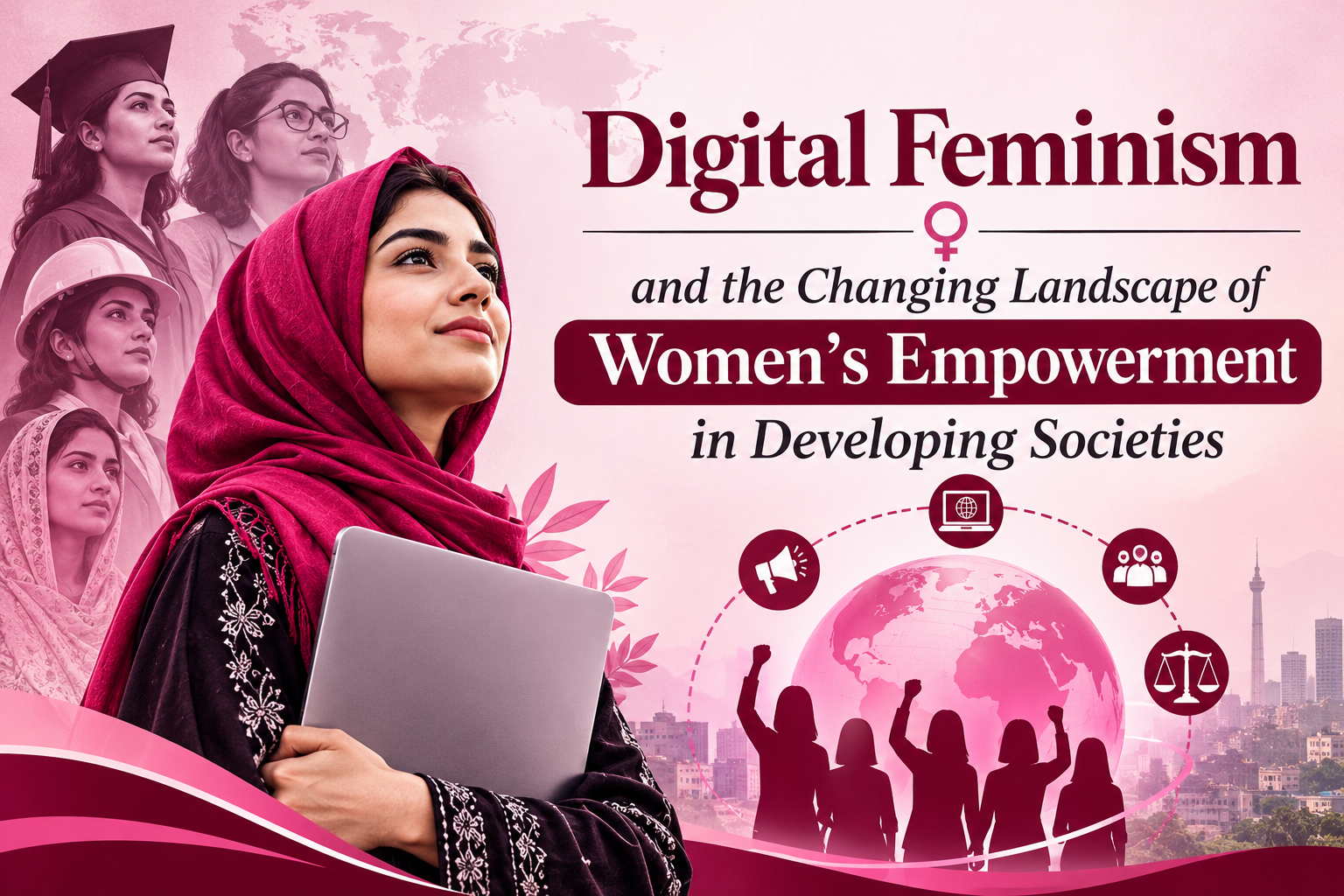
Digital Feminism and the Changing Landscape of Women’s Empowerment in Developing Societies
DOI:
https://doi.org/10.63056/jllsa.2.11.2026.449Keywords:
digital feminism, women's empowerment, digital divide, digital activism, agency, developing societiesAbstract
With increasing access to the internet and the evolution of social media platforms, digital feminism has become a new means of disseminating feminist thinking, organizing, and mobilizing in the digital space. In the developing world, structural and cultural barriers often constrain women from holding a public role. The digital space is thus emerging as a significant site for renegotiating gender relations and pursuing empowerment. Although digital platforms offer women new opportunities to raise their voices, network, learn, become entrepreneurs, and take action, these opportunities are not equally shared. Digital divides and other barriers, such as online harassment, surveillance, cultural restrictions, and unequal access, continue to influence and restrict women's participation online. This study explores how women in [country/community] experience, interpret, and negotiate digital feminism in their daily lives. It adopts a qualitative interpretive research design and draws on semi-structured, in-depth interviews with 20–30 women selected through purposive and snowball sampling. The data are analysed using Braun and Clarke's six-phase thematic analysis. Ethical procedures, including informed consent, anonymity, and confidentiality, are followed. The analysis identified five themes: digital voice, visibility, and collective solidarity; education, skill development, and economic empowerment; negotiating family expectations and patriarchal norms; online harassment, surveillance, and digital inequality; and strategic participation and the limits of digital empowerment. Together, these themes present digital feminism as a contested space in which women exercise and negotiate agency within existing social structures. By focusing on women's daily lives, the study contributes to the growing scholarship on gender and digital media in the Global South. The findings can inform gender-sensitive policies on digital inclusion, online safety, digital literacy, and platform governance that respond to the needs of women in developing societies.
Downloads
Published
How to Cite
Issue
Section
License
Copyright (c) 2026 Asia Rahman Khan Lodhi, Mubeen Ijaz, Shabana Siddiqui

This work is licensed under a Creative Commons Attribution 4.0 International License.