Evaluating the Validity of LLM-Generated Synthetic Respondents in Representing Human Response Patterns
DOI:
https://doi.org/10.63056/jllsa.2.11.2026.465Keywords:
Artificial Intelligence, Large Language Models, Psychometric Validation, Response Patterns, Synthetic Respondents, Survey ResearchAbstract
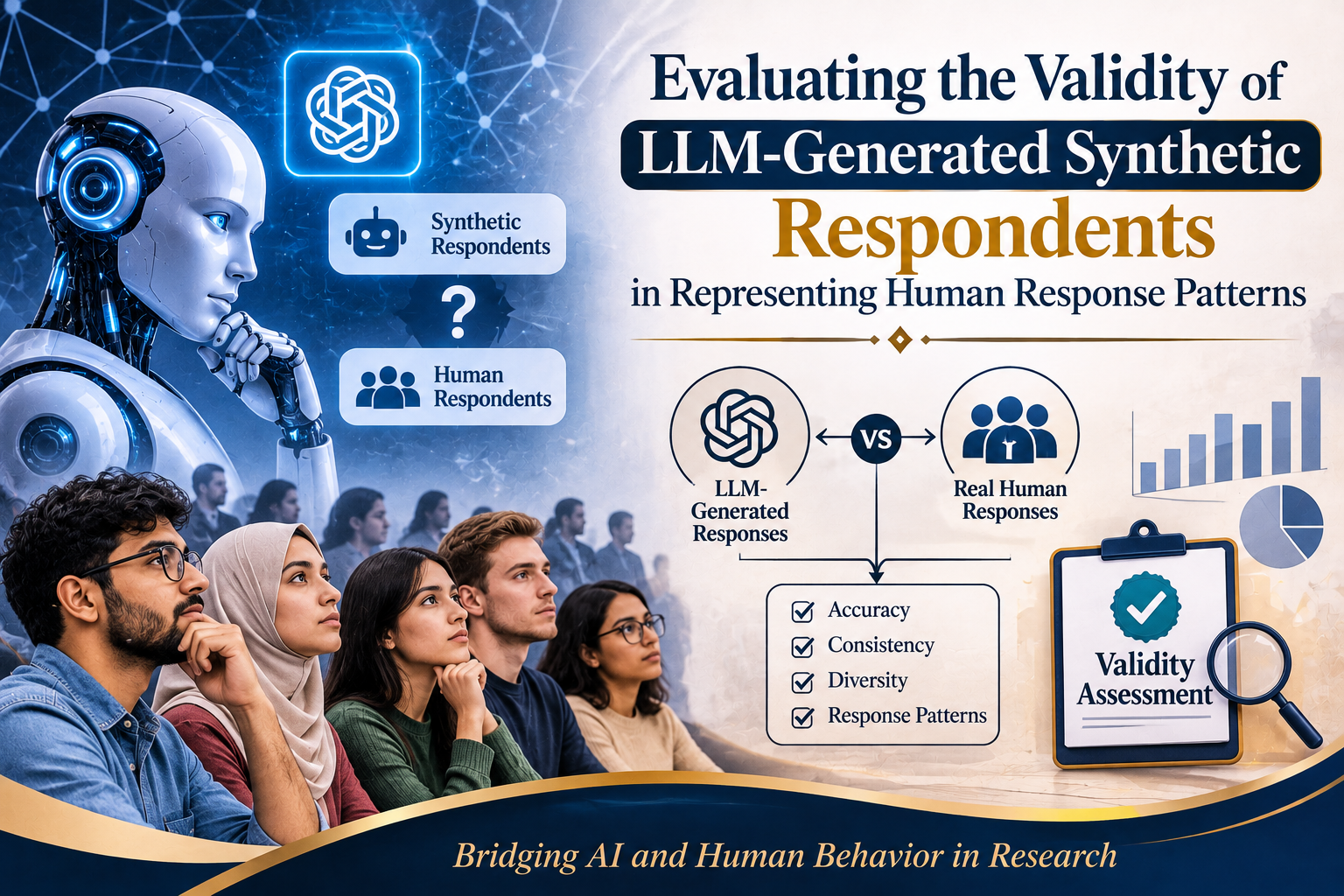
With the surge of the Large Language Models (LLMs), new applications for the creation of synthetic respondents have emerged in research settings where gathering human data can be expensive, time intensive or otherwise challenging. This study used established survey instruments to evaluate the validity of LLM-generated synthetic respondents in representing human response patterns across four themes. Data were collected from university students using a structured questionnaire. The same questionnaire items were presented to ChatGPT (GPT-4o), Google Gemini, and Anthropic Claude to compare human and AI-generated responses across the four themes. The analysis included the following characteristics: central tendency, distribution of scores, variability of responses, inter item relationships, and latent construct representations. Comparisons and statistical analyses were made to understand how close the synthetic responses were at both obtrusive and hidden levels to the human response. The results showed that the LLM-generated responses tended to be internally coherent and self-consistent, but there were some significant differences between the LLM results and human data. The differences in score distributions, lower amount of variability and different patterns of construct representation were observed in synthetic responses. Some of the aggregate trends were similar to those seen in humans, while others pointed to differences in LLM response patterns, raising questions about how well these models can capture the diversity and complexity of people. The results also demonstrated that there was variation in the level of agreement between the human and synthetic data on each construct, emphasizing the need for multiple analyses of data for multiple levels of validity, and not just a superficial empirical reassonance. In general, the observations of the study showed empirical evidence of strengths and limitations of LLM generated synthetic respondents and added to the larger discussions of the viability of using LLM in social and behavioral science research. The results indicated that synthetic respondents could provide valuable additional data for exploratory investigations and cannot be treated blindly as alternatives to human respondents if proper validation is not applied.
Downloads
Published
How to Cite
Issue
Section
License
Copyright (c) 2026 Kainat Khalid, Dr. Bushra Yasin, Dr. Abira Ismat Butt

This work is licensed under a Creative Commons Attribution 4.0 International License.